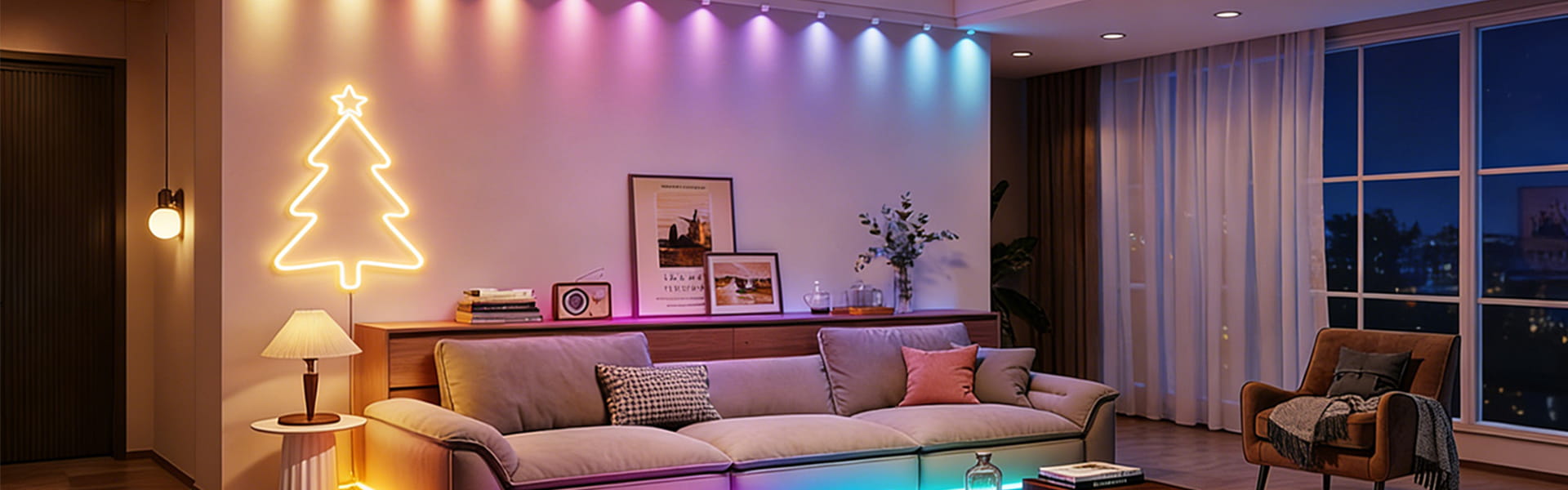
Frequent disconnection is one of the most common problems in Smart Lighting projects. Users may see the lamp go offline, app commands may delay, grouped lights may respond unevenly, or the system may fail after a router restart. These smart lighting disconnection issues usually come from a combination of wireless signal, device firmware, router settings, cloud response, and product-level testing.
Smart lighting demand continues to grow as more users expect app control, scene automation, and connected device management. Grand View Research reported that the global smart lighting market was valued at USD 15.05 billion in 2022 and is projected to reach USD 72.35 billion by 2030, driven partly by smartphone-based control and IoT device connection.
Many smart lighting devices depend on 2.4G WiFi because it offers wider coverage than 5G WiFi in indoor spaces. However, weak signal areas can still cause unstable connection. Thick walls, metal cabinets, large appliances, distance from the router, and crowded installation areas may all reduce signal quality.
For lamps installed in bedrooms, corridors, showrooms, outdoor corners, or commercial ceilings, signal testing should be done before mass installation. A light that connects well near the router may disconnect frequently when installed far from the access point.
Surplife’s IoT platform compatibility solution uses a WiFi dual-mode structure with 2.4G WiFi and BLE. BLE supports device discovery and network configuration, while WiFi handles data transmission between lights, local networks, and cloud platforms. This type of structure helps improve connection convenience and remote control capability.
Some iot lighting connection problems are caused by router settings rather than the lighting product itself. Band steering, hidden network names, WPA3-only encryption, overloaded routers, and unstable automatic channel switching can interrupt smart lighting communication.
For better stability, the lighting system should be tested under common router environments before shipment. Clear setup instructions should also guide users to connect the device to a visible 2.4G network, keep router firmware updated, and avoid placing too many IoT devices under one weak router.
A smart lighting product should not only connect once. It should reconnect smoothly after power loss, router restart, app update, or network change. If the firmware does not handle these situations well, the product may appear offline even when the hardware is working.
Surplife describes a smart lighting control app as the software layer connecting lighting hardware, wireless communication, scene settings, user permissions, and cloud management into one operating system. This means stable connection depends on the full system, not only the lamp body.
A reliable reconnection design should include automatic network recovery, clear device status display, fast pairing mode, and stable firmware response after interruption.
Smart lighting becomes more complex when one app controls many lamps. Group switching, RGBIC effects, scene changes, music sync, timer settings, and multi-room control all require more communication stability than single-device control.
When the system is not designed for multi-device use, users may see some lights respond first while others delay or disconnect. This creates the feeling of an unstable lighting control system, especially in commercial spaces, Decorative Lighting scenes, and whole-home lighting projects.
Surplife positions its smart lighting ecosystem around app customization, IoT platform compatibility, RGBIC lighting effect algorithms, multi-device sync, OEM/ODM capability, and supply chain support, which shows why product-level system design is important for larger lighting applications.
| Disconnection Cause | Typical Sign | Better Solution |
|---|---|---|
| Weak WiFi signal | Device goes offline in certain rooms | Improve router position or add coverage |
| Router incompatibility | Pairing fails or drops often | Use stable 2.4G settings |
| Firmware conflict | App updates cause control delay | Test firmware and app versions together |
| Device overload | Group control responds unevenly | Plan capacity before installation |
| Cloud delay | Remote control feels slow | Support local control where possible |
| Poor reset logic | Device cannot reconnect after power loss | Build automatic recovery rules |
A smart lighting system includes both firmware and app software. When the app is updated but device firmware remains outdated, command execution may become inconsistent. When firmware updates are released without enough compatibility testing, older product batches may disconnect more frequently.
To fix smart lighting frequent disconnection, manufacturers should manage firmware version records, OTA update stability, app compatibility, and rollback planning. This reduces after-sales pressure and keeps different production batches working under the same control logic.
Some smart lighting functions need cloud support, especially remote control, user accounts, shared devices, and cross-location management. If the cloud response is slow, users may think the lamp has disconnected. In reality, the device may still be online but the command path is delayed.
A better system separates local control from cloud control. Basic operations such as switching, dimming, and color adjustment should remain responsive whenever possible, while cloud functions handle remote management and account-based services.
Surplife’s smart lighting content explains that an integrated IoT lighting platform should support multiple communication protocols such as WiFi, Bluetooth, and emerging standards to keep devices stable, responsive, and compatible with broader smart environments.
Many disconnection problems are not discovered during simple function checks. A lamp may pass power-on testing but still fail during long-hour app control, repeated pairing, group scene changes, or network recovery.
A complete lighting system connection troubleshooting process should include pairing success rate, command response speed, reconnection after router restart, multi-device group control, firmware update testing, cloud response testing, and aging tests under continuous operation.
Surplife’s strength is that smart lighting hardware, app customization, IoT platform compatibility, RGBIC effect control, and OEM/ODM development can be considered together. This helps reduce the gap between product design, software control, and real installation performance.
Smart lighting systems disconnect frequently because of weak signal coverage, router mismatch, poor reconnection logic, device overload, firmware conflict, cloud delay, or insufficient production testing. A stable system must be planned as a complete lighting control solution from the beginning. By combining reliable hardware, clear IoT communication, app compatibility, firmware control, and standardized testing, Surplife helps smart lighting products stay connected, responsive, and easier to manage across home, decorative, commercial, and project-based lighting applications.