Smart Lighting products are becoming more competitive because many suppliers can offer basic app control, RGB colors, remote switching, and timer functions. Real smart lighting brand differentiation now depends on whether the product can deliver a better control experience, stronger scene value, more stable connectivity, and a clearer product identity.
MarketsandMarkets estimates that the global smart lighting market will grow from USD 9.86 billion in 2025 to USD 17.38 billion by 2030, with a 12.0% CAGR. This growth means lighting brands need more than standard products. They need smart systems that are easier to use, easier to recognize, and easier to expand.
A strong lighting product innovation strategy should begin from the whole system, not only the lamp shape. App interface, wireless connection, lighting effect logic, firmware update, device grouping, and user scenarios all influence how the product is remembered.
Surplife supports AI lighting engine, IoT platform compatibility, RGBIC lighting effect algorithm, multi-device sync, OEM/ODM capability, and supply chain support. These capabilities help lighting products move from simple hardware into connected smart lighting solutions.
Many smart lighting products lose differentiation because they share similar app pages and similar control logic. A customized app can improve recognition through interface color, device naming, scene presets, control layout, language options, and user permission design.
A practical app should make common actions easy, such as brightness adjustment, color temperature control, RGBIC effects, timing, music sync, and group management. Surplife describes a smart lighting control app as the software layer that connects lighting hardware, wireless communication, scene settings, user permissions, and cloud management into one operating system.
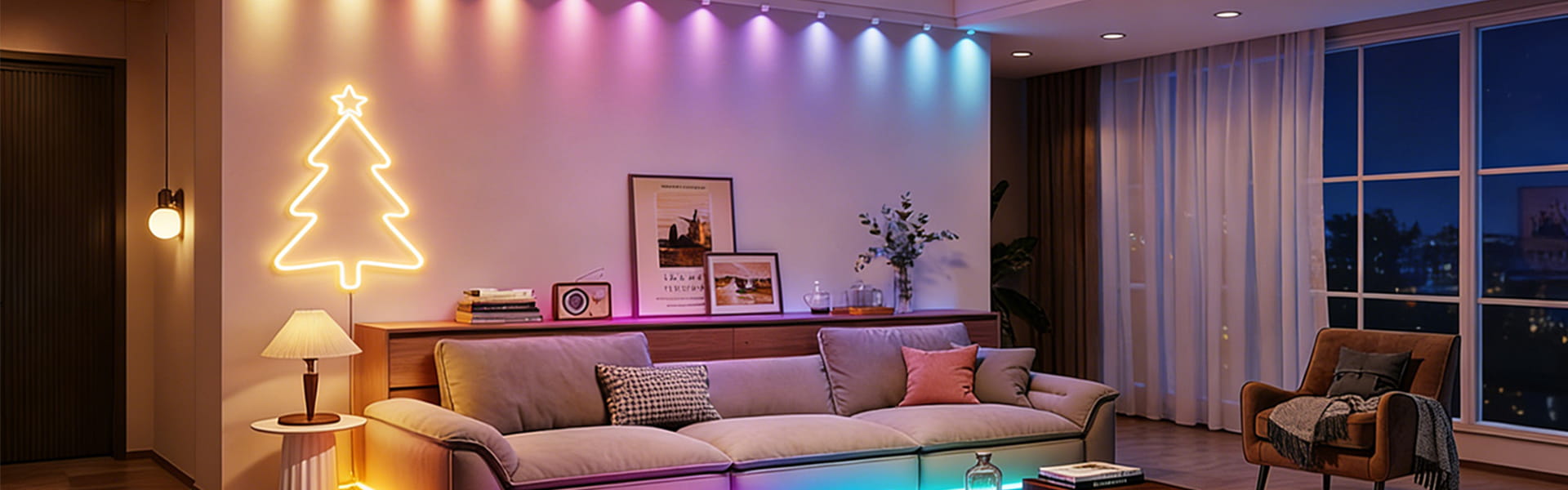
Lighting effects can become a strong selling point when they are designed around real scenes. RGBIC technology allows multiple colors to appear on one strip or fixture at the same time, which creates more dynamic visual effects than single-color output.
This helps a custom lighting system solution support different product directions, such as gaming rooms, holiday decoration, outdoor ambience, retail displays, home entertainment, and immersive commercial spaces. The key is not to add effects randomly, but to make each effect match a clear user scenario.
| Differentiation Area | Practical Method | Product Value |
|---|---|---|
| App experience | Custom interface and scene pages | Stronger brand recognition |
| Lighting effects | RGBIC and dynamic presets | More visual attraction |
| Connectivity | WiFi, Bluetooth, and IoT platform support | Better user stability |
| Product range | Lamps, strips, outdoor lights, Scene Lighting | Easier market expansion |
| OEM/ODM support | Custom design, control logic, and production | Faster product positioning |
| After-sales support | App updates and firmware management | Longer product life cycle |
To build unique smart lighting brand strategy, the product must serve specific usage needs. Home lighting should focus on comfort, family sharing, and simple control. Commercial lighting should focus on zoning, centralized management, and reliable response. Decorative Lighting should focus on dynamic effects, synchronization, and easy scene switching.
Surplife’s home smart lighting solution supports mobile app remote control, family account sharing, customized scene linkage rules, voice control compatibility, and physical control panels for daily use. This shows how scenario-based design can make smart lighting more practical and easier to accept.
Many brands focus on color effects, but stable connection can also become a competitive advantage. Users remember whether the light connects quickly, responds smoothly, and recovers after network changes.
Surplife’s IoT platform compatibility includes 2.4G WiFi and BLE structure, where BLE supports device discovery and network configuration while WiFi handles data transmission between lights, local networks, and cloud platforms. This type of platform planning helps reduce common connection problems in smart lighting products.
To differentiate smart lighting products effectively, brands should not compete only on appearance or price. Strong differentiation comes from system-level product thinking, customized app experience, RGBIC lighting effects, stable IoT connection, scenario-based design, and long-term software support. Surplife helps lighting products build this advantage through smart lighting hardware, app customization, IoT platform compatibility, RGBIC algorithms, multi-device synchronization, and OEM/ODM development capability.