An LED matrix panel, when used in vehicle environments, is a compact, programmable display made up of a dense grid of LEDs that can present text, symbols, animations, and simple graphics.
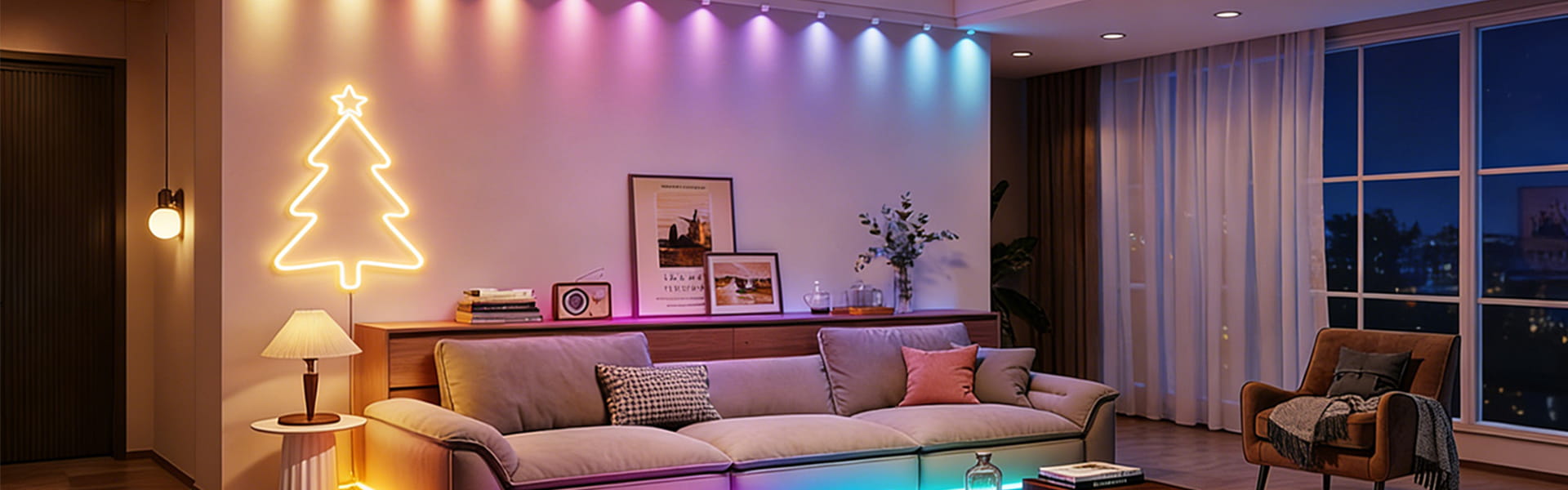
Scene lighting is a way to control multiple lights as one coordinated “setting” so a room can switch quickly between different lighting states for different moments of the day. This article explains what scene lighting is, how it works inside smart lighting systems, what scenes people actually use at home, and what to check when choosing scene-capable smart lights.
Buying smart lights is not only about choosing a bulb that connects to an app. In modern homes, smart lighting often becomes part of daily routines, multi-room control, and long operating hours.
Smart outdoor lighting combines illumination with intelligent control, giving homeowners more convenience, security, and efficiency. However, outdoor conditions are very different from indoor settings.
Smart lighting promises convenience, flexibility, and better control, but the setup stage is where many users encounter frustration. Most problems do not come from defective products, but from mismatches between lighting systems, home environments, and user expectations.
Voice control has become a common expectation in modern homes, and lighting is often the first system people want to control hands-free. This leads to a practical question: do smart lights actually work well with Alexa or Google Home in daily use, and what does that interaction look like beyond simple demonstrations?
Interior lighting atmosphere is not created by brightness alone. It is shaped by how light changes over time, how different light sources interact, and how easily lighting adapts to daily life.
Smart floor lamps are a practical lighting choice for living rooms and bedrooms because they add controllable light at a comfortable height without requiring installation work. In many homes, ceiling lights handle general brightness, but they can feel too intense at night or too flat when a softer environment is preferred.
Smart mood lights are used to shape how a home feels at different times of day and during different activities. They are not limited to colorful party effects. In everyday home lighting, mood lighting supports comfort, visual balance, and repeatable routines by letting users adjust brightness, color temperature, and color in a controlled way.
Smart light bulbs are often associated with apps, cloud services, and remote control, which leads to a common concern: what happens when the internet is unavailable? In real homes, network interruptions are not rare, so understanding how smart bulbs behave offline is important for everyday reliability rather than feature comparison.
RGB smart light bulbs are often associated with colorful scenes and decorative effects, which leads many users to question whether they are practical for everyday lighting. In real home environments, daily lighting places higher demands on comfort, stability, and usability than on visual effects alone.
Smart light bulbs look simple from the outside, but inside they rely on coordinated hardware and software to adjust color and brightness smoothly. These changes are not cosmetic tricks. They are controlled lighting behaviors designed for daily use, long operating hours, and consistent performance across different rooms.