
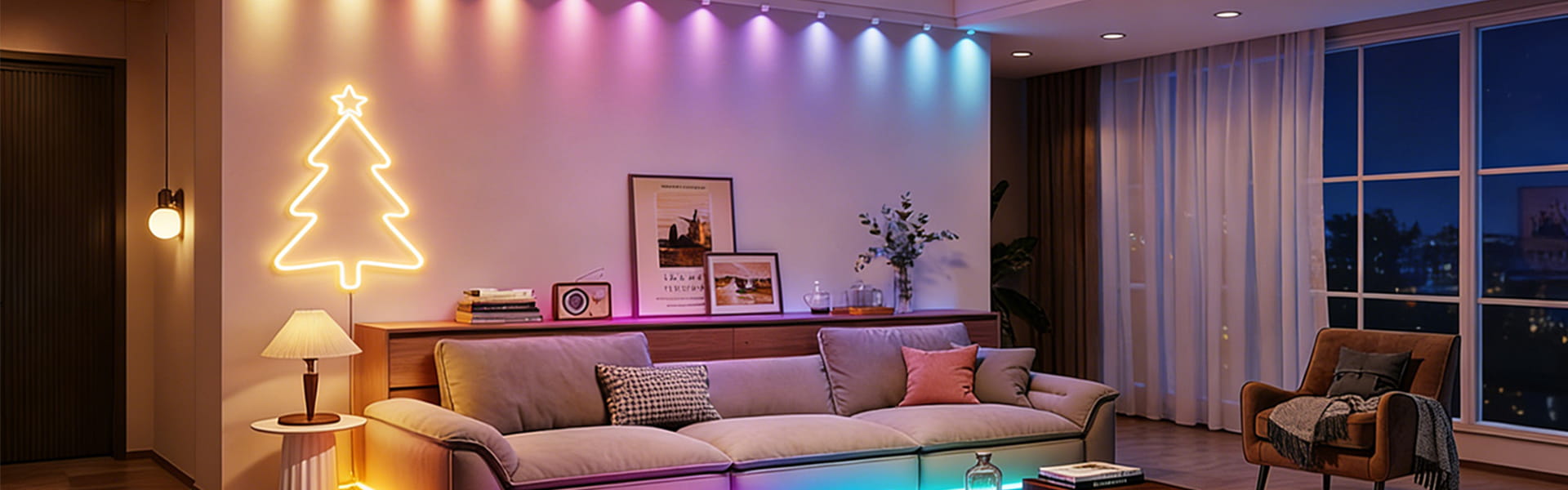
Reducing energy consumption at home is no longer only about choosing efficient light sources. How lighting is controlled, scheduled, and adapted to daily behavior plays an equally important role. Smart Lighting systems combine LED technology with intelligent control, allowing lighting to operate in a more precise and purposeful way.
In modern homes, smart lighting is increasingly used not only for comfort and convenience but also as a practical method to manage energy use more effectively. Surplife develops smart lighting products with this long-term residential focus, supporting both everyday households and structured, project-based lighting deployments.
One of the most direct ways smart lighting reduces energy consumption is by limiting unnecessary usage.
Traditional lighting often stays on longer than required simply because it relies on manual switching. Smart lighting allows lights to turn on and off based on schedules, routines, or user habits. Rooms that are not in use do not remain fully lit by default.
In daily life, this leads to more disciplined lighting behavior without requiring constant attention. Lights follow predictable patterns rather than being left on out of habit, which reduces overall energy use across the home.
Many homes use lighting at full brightness even when lower levels would be sufficient. Smart lighting addresses this through precise dimming and output control.
Lower brightness consumes less power, especially in spaces where full illumination is not always required. Evening relaxation, background lighting, or nighttime movement all benefit from reduced light output.
Smart lighting allows these lower levels to be set once and reused consistently. Over time, this reduces energy draw without affecting usability or comfort, especially in living rooms and bedrooms where lighting needs change throughout the day.
Scheduling plays a central role in energy-conscious lighting.
Smart lighting systems allow lights to operate according to daily routines rather than manual decisions. Morning, daytime, evening, and nighttime lighting can each follow a defined pattern.
This structure prevents lights from running longer than needed and supports predictable energy usage. For households with regular schedules, automation reduces both wasted electricity and the mental effort required to manage lighting manually.
In multi-room homes, scheduled operation becomes even more valuable, as it keeps lighting behavior consistent across different areas.
Smart lighting helps spread lighting usage more evenly rather than relying on a few high-output fixtures.
Instead of using one bright ceiling light at maximum output, smart systems often combine multiple light sources at lower levels. Floor lamps, wall lights, and ceiling lights can work together, each operating at reduced brightness.
This approach lowers peak power demand while maintaining adequate illumination. It also improves comfort, since light is distributed more evenly throughout the space rather than concentrated in one point.
Surplife supports this approach by offering a complete range of smart lighting products, allowing users and solution providers to plan balanced lighting layouts rather than relying on single high-output fixtures.
Smart lighting systems are built on LED technology, which already offers high efficiency and long service life. Intelligent control further supports long-term efficiency by reducing operating hours and avoiding unnecessary full-power use.
Fewer operating hours and controlled output help maintain stable performance over time. This reduces replacement frequency and supports lower maintenance effort, which is important in both residential homes and bulk purchase scenarios.
For B-end buyers planning larger residential projects, long lifespan and predictable performance are key factors when evaluating energy efficiency across multiple units.
Smart lighting encourages users to become more aware of how lighting is used.
Through centralized control, users can see which lights are active and adjust habits accordingly. Over time, this visibility leads to more conscious decisions about lighting usage, even without actively monitoring energy data.
This gradual behavior shift supports more efficient daily use without relying on constant reminders or strict rules.
Smart lighting is effective not only for individual households but also for structured residential environments such as apartments, serviced housing, and long-term rental properties.
In these settings, predictable lighting behavior and controlled energy usage help maintain consistent operating costs. As a manufacturer and solution provider, Surplife supports smart lighting solutions designed for scalable deployment, stable supply, and consistent control behavior across different lighting categories.
This makes smart lighting suitable for both everyday home users and B-end customers seeking practical energy management across multiple spaces.
Smart lighting can reduce energy consumption by changing how and when light is used rather than relying solely on more efficient light sources.
Through scheduling, dimming, coordinated lighting layouts, and routine-based operation, smart lighting supports lower energy use while maintaining comfort and usability. Over time, these small adjustments add up to meaningful reductions in household energy consumption.
With a complete smart lighting portfolio designed for residential use and scalable projects, Surplife enables users to improve energy efficiency through practical, reliable, and well-structured smart lighting solutions.