
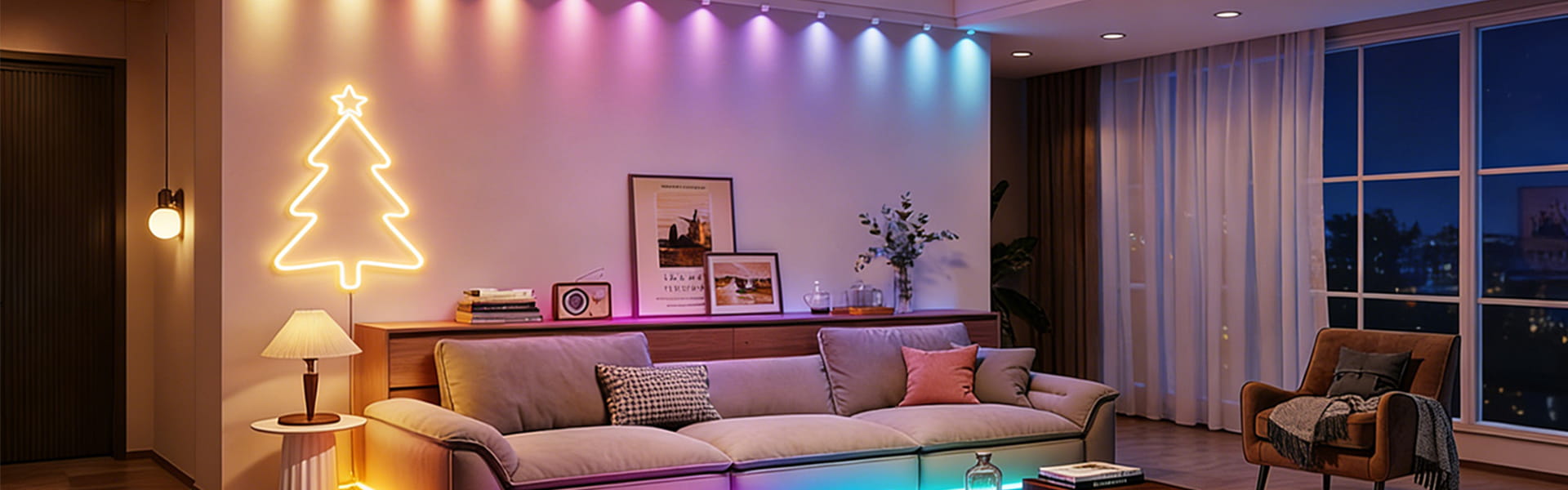
Smart floor lamps play a unique role in modern home lighting design. Unlike ceiling lights that provide general illumination or table lamps that serve fixed purposes, floor lamps introduce vertical lighting, visual rhythm, and spatial balance. When smart control is added, floor lamps become more than accent fixtures—they turn into adaptable design tools that support both function and atmosphere.
In contemporary homes, smart floor lamps are increasingly used to complement ceiling lighting, define zones, and enhance interior aesthetics without structural changes. Surplife designs smart floor lamps as part of a broader Smart Lighting system, allowing them to work seamlessly with other residential lighting products while remaining practical for everyday use and scalable for project-based lighting needs.
One of the most important contributions of smart floor lamps is their role in layered lighting design.
Homes that rely only on ceiling lights often feel flat and visually rigid. Floor lamps add a vertical light source that softens the environment and creates depth. When combined with smart control, this layered effect can change throughout the day.
Smart floor lamps support layered lighting by:
Adding indirect or directional light at eye level
Balancing overhead lighting to reduce harsh shadows
Creating visual separation between different functional areas
This layered approach improves spatial comfort and makes rooms feel more intentional rather than uniformly lit.
Modern homes increasingly use open layouts where living, dining, and working areas share the same space. Smart floor lamps help define these zones without physical barriers.
Placed next to a sofa, reading chair, or workspace, a floor lamp visually anchors that area. With smart grouping and scene control, the lamp can operate independently or in coordination with ceiling lights.
In daily use, this allows:
Softer lighting in relaxation zones
Focused lighting in reading or work corners
Independent adjustment without affecting the entire room
This flexibility is valuable in both residential settings and bulk purchase scenarios where adaptable layouts are required.
Smart floor lamps allow precise control over brightness and color temperature, which directly affects how a room feels.
Warm tones create a relaxed and intimate atmosphere, while neutral or cooler tones support focus and clarity. Smart control allows these changes to happen instantly without moving fixtures or replacing bulbs.
In interior design, this adaptability allows one lamp to support multiple moods:
Evening relaxation with low, warm light
Reading or hobbies with balanced brightness
Social settings with ambient background lighting
Because floor lamps often sit within the visual field, smooth dimming and stable light output are especially important for comfort.
From a design perspective, smart floor lamps offer one major advantage: they improve lighting design without altering ceilings, walls, or wiring.
This makes them ideal for:
Rental homes
Temporary living arrangements
Gradual home upgrades
Spaces where ceiling changes are not practical
Smart floor lamps can be repositioned easily as furniture layouts change. Their lighting behavior can be adjusted digitally, keeping the design flexible over time.
Surplife smart floor lamps are designed to integrate visually with modern interiors while maintaining compatibility with the broader smart lighting ecosystem, allowing homeowners and solution providers to adapt lighting design without starting over.
Smart floor lamps show their full value when they operate as part of a coordinated lighting system.
Rather than acting alone, they can be grouped with ceiling lights, wall lights, or decorative fixtures to create unified lighting scenes. For example, ceiling lights can provide base illumination while floor lamps handle atmosphere and visual emphasis.
This coordination allows:
Consistent color temperature across different fixtures
Smooth transitions between lighting modes
Unified control through scenes and schedules
For users managing multi-room homes or interior designers planning consistent layouts, this system-based approach supports long-term design consistency.
Beyond design, smart floor lamps improve everyday living comfort.
They reduce reliance on fixed overhead lighting, support softer evening environments, and provide targeted light where it is needed most. Control through an app or preset scenes reduces repeated manual adjustments.
In daily routines, this translates into:
Easier transitions between activities
Reduced glare during nighttime use
Lighting that adapts naturally to how spaces are used
Because floor lamps are often used for long periods, stability and consistent performance are essential. Surplife focuses on practical usability and long-term reliability across its smart lighting products, making them suitable for continuous residential use as well as structured residential projects.
Smart floor lamps are not only relevant for individual homeowners. They are also useful in project-based lighting environments such as serviced apartments, show units, and model homes.
Their advantages include:
No fixed installation requirements
Easy replacement or repositioning
Consistent control behavior across multiple units
For buyers looking for a manufacturer that supports scalable lighting solutions, Surplife provides smart floor lamps as part of a complete product portfolio. This allows consistent design, stable supply, and coordinated control across different lighting categories.
Smart floor lamps improve home lighting design by adding flexibility, depth, and adaptability that fixed lighting alone cannot provide. They support layered lighting, define functional zones, enhance atmosphere, and adjust easily as homes evolve.
When integrated into a broader smart lighting system, smart floor lamps become a practical design tool rather than a decorative afterthought. With a comprehensive smart lighting lineup and experience supporting both residential users and solution-oriented buyers, Surplife enables smart floor lamps to function as a reliable and adaptable element in modern home lighting design.