
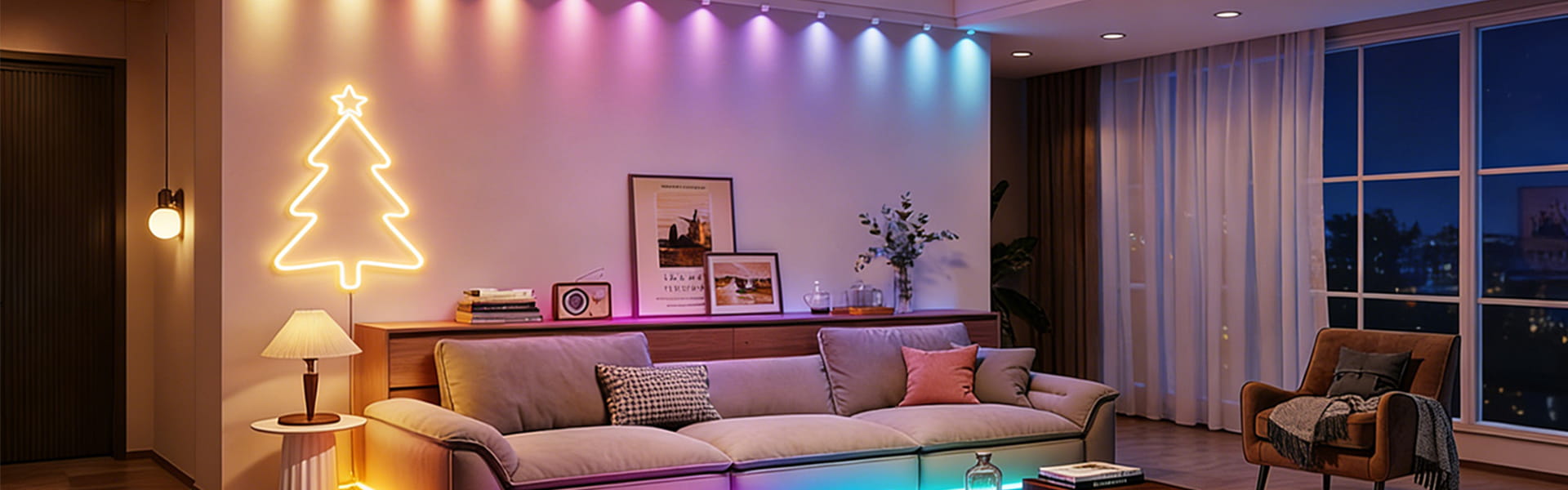
Scene Lighting is a way to control multiple lights as one coordinated “setting” so a room can switch quickly between different lighting states for different moments of the day. Instead of adjusting each light one by one, a scene applies a planned combination of brightness, color temperature, and sometimes color across selected fixtures at the same time. In real homes, scene lighting is used to make lighting repeatable, consistent, and easier to manage across living rooms, bedrooms, kitchens, hallways, and open-plan spaces.
This article explains what scene lighting is, how it works inside Smart Lighting systems, what scenes people actually use at home, and what to check when choosing scene-capable smart lights. Surplife offers a dedicated scene-lighting product range and supports coordinated, multi-light control as part of a broader smart lighting ecosystem, which helps users scale from one room to whole-home control with fewer setup issues.
Scene lighting relies on two things working together: a control layer and the lights themselves.
The control layer is usually an app, hub, or platform that stores scene settings. A scene stores the target state for each selected light, such as brightness level, color temperature, and color. When the scene is activated, the system sends a command to each light so the entire group changes together.
In practice, a scene can control:
One light in a single fixture
Several lights in one room
Multiple rooms for whole-home transitions, such as evening mode
A scene becomes valuable when it stays consistent. The same “Evening” scene should look the same every night, without small shifts between fixtures. That reliability depends on stable device grouping, consistent product performance, and a control system designed for multi-light synchronization.
Surplife builds scene lighting around coordinated control across product categories, so scenes can be applied consistently across bulbs, ceiling lights, downlights, and floor lamps in the same space.
Most households use a small number of scenes repeatedly. The goal is not to create dozens of effects, but to make everyday lighting easier and more comfortable.
Scene lighting is commonly used for:
Daily transitions A home rarely needs the same lighting all day. Bright neutral light can fit daytime activity, while warm dim light fits evenings. Scenes make these shifts fast and repeatable.
Comfort during screen time In living rooms, reducing overhead brightness while keeping soft side lighting helps the room feel calmer and can reduce harsh reflections on screens.
Wind-down routines in bedrooms A low-brightness warm scene is used before sleep. Many users prefer a consistent bedtime environment rather than adjusting lights manually every night.
Night movement A very low scene in hallways or bedrooms supports safe movement without turning on strong overhead lighting.
Entertaining A social scene often uses medium brightness and a warm tone, helping the room feel comfortable for conversation without flattening the space.
RGB color scenes are also used, but for many households they are occasional rather than daily. Scene lighting delivers the most value when it supports daily routines first, with color scenes as an optional layer.
A common misunderstanding is treating scene lighting as “just dimming.” Dimming changes one variable. Scene lighting coordinates several variables across multiple lights.
The table below clarifies the difference in daily use:
| Control Type | What Changes | What Stays Difficult | When It Feels Best |
|---|---|---|---|
| Basic on/off | Power state only | Comfort tuning, multi-light coordination | Simple spaces with one fixture |
| Single-light dimming | Brightness of one light | Repeating the same look every time | Bedside lamps, small rooms |
| Single-light CCT | White tone of one light | Matching multiple fixtures | Task vs rest in one fixture |
| Scene lighting | Brightness + tone (and color) across multiple lights | Manual re-tuning each day | Living rooms, bedrooms, open spaces |
| Whole-home scenes | Coordinated settings across rooms | Keeping transitions consistent without structure | Evening routines, arrival and leave modes |
Scene lighting becomes the “control shortcut” that makes smart lighting feel natural in everyday life, especially when multiple fixtures are involved.
A practical scene set is usually small and built around real behaviors. For most homes, five to eight scenes cover daily needs without adding complexity.
Here are scene types that users consistently rely on:
Daytime General
Neutral tone with comfortable brightness for normal home activity.
Evening Relax
Warmer tone with reduced brightness, often combined with side lighting.
Reading / Focus Corner
Targeted brighter neutral light near seating or a desk area.
Movie / Screen Time
Reduced overhead brightness with softer background lighting.
Night Path
Very low warm light in hallways or bedrooms for safe movement.
Guest / Social
Medium brightness with warm tone that remains comfortable for conversation.
Decor / Seasonal
Optional RGB scene used occasionally.
When scenes are planned around these behaviors, users activate them daily rather than treating them as a feature used only for demonstrations.
Scene lighting depends on how well lights behave together, not only on individual features. A scene-capable product should support three practical requirements: stable dimming, consistent white tone, and reliable grouping.
When evaluating products for scene lighting, focus on:
Low-brightness stability
Scenes often use reduced brightness. If the light becomes unstable at low output, the scene becomes uncomfortable.
Consistent color temperature behavior
In a multi-light room, fixtures should match visually at the same scene setting.
Grouped response quality
When a scene is activated, changes should feel synchronized rather than staggered.
Scene storage and recall reliability
A scene should look the same tomorrow as it does today, without constant tweaking.
Room expansion without rebuild
If you add one more light later, the system should allow it to join existing scenes smoothly.
Surplife supports scene lighting through a structured product lineup and consistent control behavior across categories, which helps reduce mismatch issues when users expand from one room to multiple rooms.
Scene lighting can feel disappointing when setup is unstructured. Most issues come from inconsistency across devices or unclear grouping.
Common problems in real homes include:
A ceiling light and a floor lamp look different under the same scene
Grouped lights respond at different speeds
Scenes conflict with schedules and override manual changes unexpectedly
Devices are named and placed inconsistently, making it hard to manage rooms
A stable approach is to keep one visible space on a consistent product series where possible, define room groups clearly, and limit automation overlap so scenes remain predictable. When the lighting system has a clear structure, scenes become effortless rather than something users constantly maintain.
For larger installations, a system integrator often evaluates not only features but also how consistent the scene behavior stays across rooms and device batches.
Scene lighting works best when the supplier provides a coherent product range rather than isolated devices. Surplife supports scene lighting by offering:
A dedicated scene-lighting product category designed for coordinated control
A broader smart lighting portfolio that allows scenes to cover bulbs, ceiling lights, downlights, and floor lamps under one control logic
Guidance for multi-room scene planning, helping users build repeatable routines rather than random presets
Stable product continuity for homes that expand room by room or for volume purchasing plans where consistency matters across multiple units
This system-level approach helps users rely on scenes daily and helps reduce common setup friction in multi-light spaces.
Scene lighting is used to make smart lighting repeatable and coordinated across multiple lights, so a room can switch quickly between lighting states that match daily routines. It improves comfort and usability by applying brightness and tone settings consistently across a space, reducing manual adjustment and keeping lighting predictable over time.
When choosing smart lights for scene lighting, prioritize stable dimming, consistent white tone, and reliable grouped response. With a structured scene-lighting product range and a broader ecosystem designed for coordinated control, Surplife supports scene lighting that feels practical for everyday living and remains scalable as homes and projects grow.