Lighting system compatibility determines whether smart lights can connect, communicate, synchronize, and remain usable within a wider digital ecosystem. Poor compatibility increases setup failures, support costs, product returns, and user frustration, while a properly planned platform allows different devices and control methods to work together consistently.
The importance of lighting system compatibility begins before a product reaches the market. Communication protocols, controller design, firmware structure, cloud services, mobile operating systems, regional voice platforms, and future update requirements must all be considered during development.
| Compatibility Area | Question to Verify | Risk When Overlooked |
|---|---|---|
| Communication | Which protocols are supported? | Devices cannot connect reliably |
| Mobile platform | Are current OS versions tested? | Pairing or control functions fail |
| Voice ecosystem | Which commands and regions work? | Advertised functions become unavailable |
| Product grouping | Can different lights synchronize? | Scenes show inconsistent timing |
| Firmware | Can versions be updated safely? | Older inventory loses functionality |
| Network recovery | What happens after disconnection? | Users must repeatedly reset devices |
These checks help identify Smart Lighting compatibility issues before tooling, packaging, inventory preparation, and market launch.
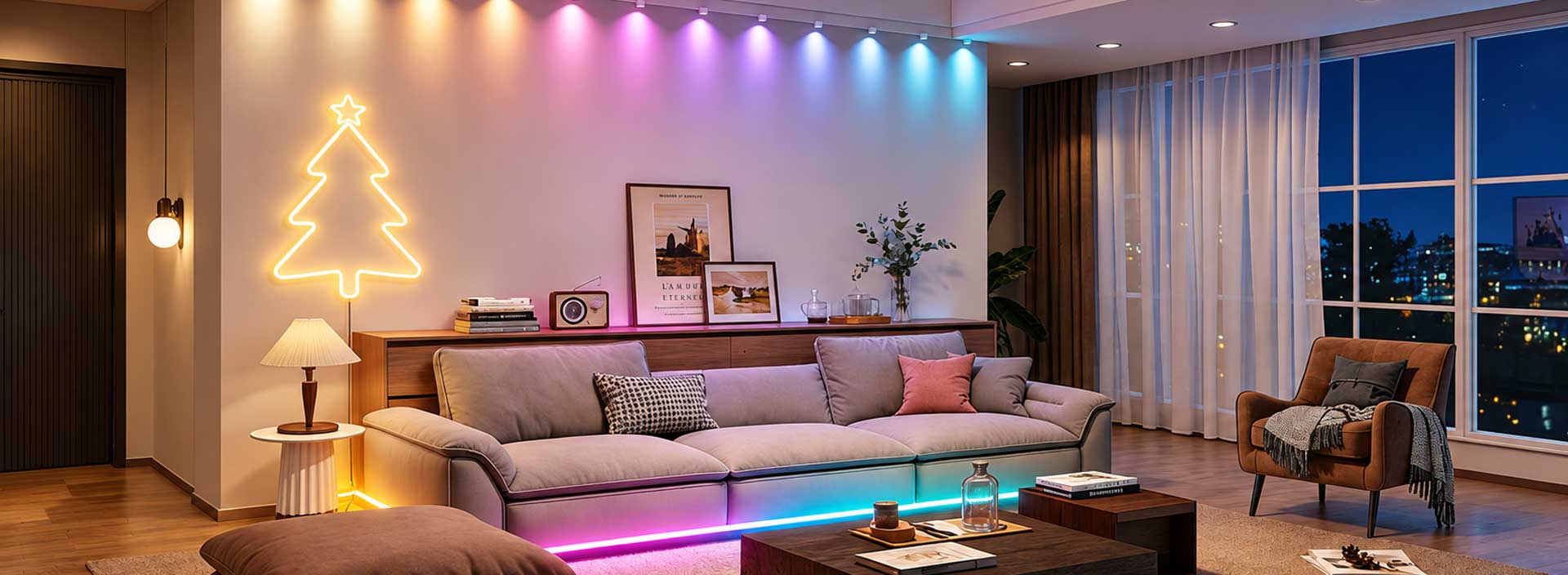
Compatibility is not limited to placing several products in the same application. Genuine smart lighting multi device integration requires products to respond predictably as a coordinated group.
A bulb, LED strip, light bar, outdoor light, and decorative fixture may use different electrical structures and control capabilities. Their available brightness ranges, color modes, scene effects, and communication speeds may also differ. Group control must account for these differences rather than sending identical commands without validation.
A dependable system should define:
Which products can be grouped together
Which functions are shared across the group
How unsupported commands are handled
How quickly devices respond to synchronized scenes
How the system recovers after power or network loss
This becomes especially important for gaming rooms, home theaters, commercial spaces, holiday installations, and other applications where several lighting products operate at the same time.
An IoT device integration system connects hardware, firmware, applications, cloud services, and external control platforms. A weakness in any layer can affect the complete experience.
For example, a device may connect successfully to an app but fail to respond through a voice assistant. Another product may support remote control yet show visible delays during multi-light synchronization. Compatibility testing must therefore evaluate actual operating sequences, not only whether a platform logo can be added to the package.
Our manufacturing process treats integration as a cross-functional task. Electronics, communication modules, firmware, lighting effects, app commands, and production testing need a shared specification. This reduces the risk that hardware revisions or component substitutions create unexpected software behavior.
Lighting platform compatibility requirements vary by country, sales channel, and application. Voice assistants, router configurations, mobile systems, privacy expectations, and preferred languages are not identical in every market.
Before product development or customization begins, buyers should confirm:
Target countries and app languages
Required mobile operating systems
Preferred voice-control platforms
Wi-Fi, Bluetooth, Matter, or other protocol needs
Number and type of products in each group
Required automation and scene functions
Expected firmware support period
This information helps manufacturers select a more appropriate technical route and prevents unnecessary features from increasing development complexity.
Product ranges rarely remain unchanged. New sizes, controllers, lighting categories, and scene functions may be added after the first launch. Without a clear compatibility framework, each addition can create another isolated application or control method.
A scalable platform should allow new device profiles to be introduced while maintaining established account, grouping, automation, and update processes. Backward compatibility also deserves attention because existing users should not lose core functions when the app or cloud platform is upgraded.
Compatibility is therefore both a technical requirement and a product strategy. It supports smoother onboarding, more consistent operation, easier range expansion, and more efficient after-sales service. Evaluating it during specification development gives the lighting hardware, software platform, and intended market a stronger foundation for long-term operation.