Smart Lighting products are no longer judged only by brightness, color, or appearance. The real value now comes from how well the lighting system connects with apps, cloud platforms, scene control, voice ecosystems, and long-term product upgrades. This is why OEM smart lighting buyers increasingly prefer customized systems instead of standard lighting products with limited control options.
Standard lighting products are easy to compare by price, which makes market competition more difficult. Custom lighting systems allow brands and project operators to create a stronger product identity through app interface, lighting effects, control modes, scene presets, device categories, and packaging direction.
Surplife supports smart lighting products, app customization, IoT platform compatibility, RGBIC lighting effect algorithms, multi-device sync, and OEM/ODM service. This helps customized lighting products move beyond simple hardware and become a complete user experience.
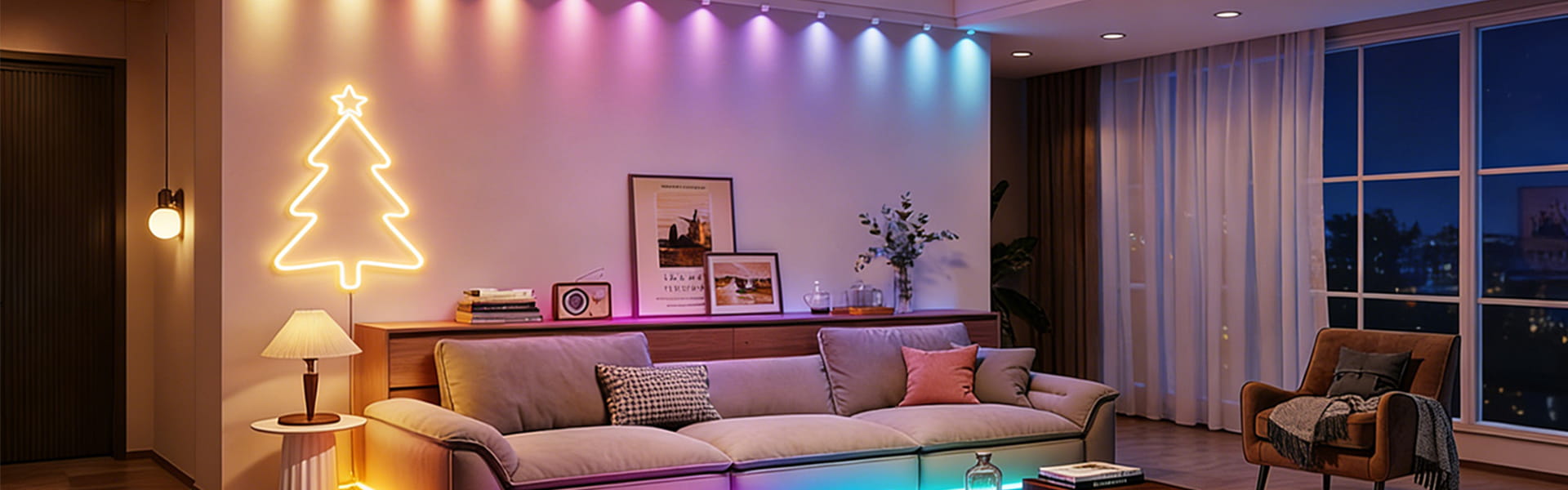
For example, a Decorative Lighting product can focus on dynamic RGBIC effects. A smart floor lamp can focus on dimming, color temperature, timer control, and remote operation. A commercial lighting product can focus on zoning, permission control, and centralized management.
A customized lighting system can match the app experience with the actual product scenario. Instead of using a generic interface, the app can be adjusted for product type, user habits, control frequency, and project scale.
Surplife’s app supports WiFi lighting product control, 16 million color options, smart light grouping, timer setup, music sync, and remote control from anywhere. The Google Play listing shows the app was updated on April 30, 2026, showing ongoing maintenance rather than one-time software delivery.
A reliable app experience helps reduce after-sales pressure because users can connect devices faster, control lights more clearly, and manage scenes with fewer steps.
Customized lighting systems are easier to expand into more product lines. A single product may start with app-controlled lamps, but later development may include LED strips, ambient lights, outdoor lights, wall washers, Permanent Lighting, or commercial lighting scenes.
A custom lighting solution provider should make this expansion easier by building a shared control structure. Surplife’s IoT platform compatibility introduces a WiFi-based lightweight mesh architecture with automatic discovery, self-organizing smart lighting nodes, dynamic routing optimization, and low-latency data transmission for light effect synchronization.
This type of system planning helps future products enter the same platform instead of requiring a completely new app or control logic.
Custom does not always mean expensive. When the system is planned properly, customization can reduce repeated development costs. A reusable app framework, stable cloud structure, consistent firmware logic, and standardized testing process can support multiple product models under one system.
| OEM Need | Custom System Value |
|---|---|
| Brand recognition | App logo, interface style, and device naming can be customized |
| Product expansion | More lighting categories can enter the same control system |
| Stable connection | WiFi, Bluetooth, and IoT logic can be tested together |
| Scene control | Presets can match home, office, retail, or decorative use |
| After-sales support | Firmware updates and app maintenance reduce repeat problems |
| Market positioning | Product functions can match different price levels |
Compared with repeated single-product development, a complete system gives lighting brands more control over product upgrades and market direction.
Many lighting products depend too heavily on third-party apps. This can limit control over user experience, update rhythm, interface style, and brand communication. Custom systems give companies more freedom to shape how users interact with the product after purchase.
Surplife explains that OEM app customization can integrate smart product control, service delivery, user operations, and marketing promotion into one mobile application. It also emphasizes continuous iterative upgrades to improve user experience and build stronger brand reputation.
This is one of the important benefits of oem smart lighting solution, especially for companies that want long-term product recognition instead of only short-term sales.
Different markets often need different lighting functions. Home users may care about easy pairing and daily comfort. Retail spaces may need bright display scenes. Hotels may require room-based control. Outdoor projects may need scheduling, durability, and simple maintenance logic.
An IoT lighting system OEM service can adjust the system according to product market, installation environment, user role, and control method. This gives buyers more flexibility when planning new product lines or entering new lighting categories.
Surplife combines smart lighting hardware, app customization, IoT compatibility, RGBIC algorithms, multi-device synchronization, and OEM/ODM support. This full-chain capability helps reduce communication gaps between product design, software control, and actual lighting performance.
OEM buyers prefer custom lighting systems because they offer stronger differentiation, better app control, easier IoT expansion, lower long-term development cost, and more control over brand experience. Standard lighting products can meet basic demand, but customized smart lighting systems can support product growth, project delivery, and future upgrades. With Surplife’s integrated lighting hardware, app development, IoT platform compatibility, and OEM/ODM customization capability, lighting products can become more stable, more recognizable, and more competitive in connected lighting markets.