
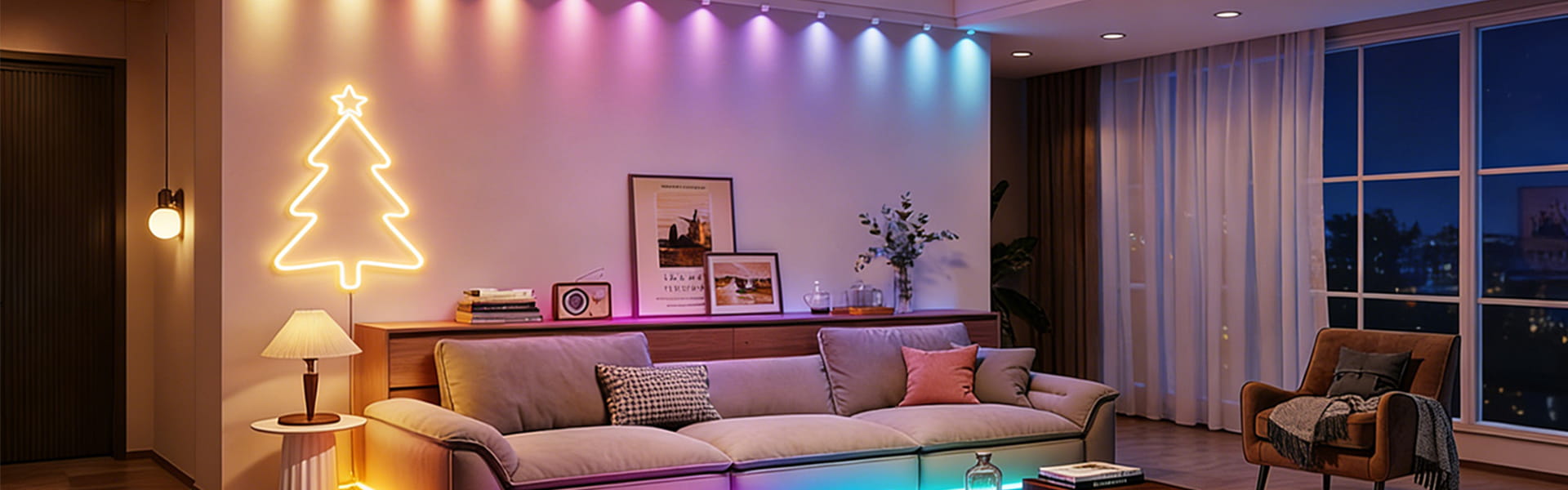
Smart light bulbs look simple from the outside, but inside they rely on coordinated hardware and software to adjust color and brightness smoothly. These changes are not cosmetic tricks. They are controlled lighting behaviors designed for daily use, long operating hours, and consistent performance across different rooms.
Understanding how smart light bulbs manage color and brightness helps users choose the right products and set realistic expectations. It also helps B-end buyers evaluate product stability, scalability, and suitability for long-term residential or project-based lighting deployments. Surplife develops smart light bulbs with this system-level perspective in mind, focusing on reliable control and consistent output across its Smart Lighting range.
Smart light bulbs use LED technology combined with an internal driver and control module.
Unlike traditional bulbs that rely on a single light source, smart bulbs typically contain multiple LED channels. Each channel is responsible for producing a specific type of light output. The internal driver regulates how much power is delivered to each channel, which directly affects brightness and color.
Key internal components include:
LED chips for different color outputs
A driver that controls electrical current precisely
A control module that receives digital commands
This structure allows the bulb to change output smoothly rather than switching abruptly between fixed states.
Brightness control in smart light bulbs is achieved by regulating electrical current rather than blocking light.
When brightness is reduced, the driver lowers the current supplied to the LED chips. This reduces light output while maintaining stable color and minimizing flicker. Higher-quality smart bulbs are designed to dim smoothly across a wide range, including low-brightness levels suitable for nighttime use.
Compared with traditional dimmers, this internal control method provides:
More precise brightness steps
Stable output at low levels
Reduced stress on components
This approach supports long operating hours and consistent performance in everyday lighting.
For white light adjustment, smart bulbs use multiple LED channels with different color temperatures.
Most smart indoor bulbs combine warm white LEDs and cool white LEDs. By changing the balance between these channels, the bulb produces different color temperatures within a defined range.
For example:
More warm-channel output produces softer, warmer light
More cool-channel output produces brighter, cooler light
This method allows continuous adjustment rather than fixed presets, which supports routines such as daytime clarity and evening comfort using the same bulb.
Smart light bulbs that support color lighting use RGB LED channels.
Instead of producing white light only, these bulbs mix red, green, and blue light at different intensities. By adjusting the ratio between these channels, the bulb produces a wide range of colors.
RGB control is commonly used for:
Ambient lighting
Scene-based environments
In daily use, RGB lighting is usually combined with white light modes rather than replacing them. Smart bulbs switch between RGB mode and white-light mode depending on user selection or scene configuration.
| Control Type | LED Channels Used | How Adjustment Works | Typical Use Scenarios |
|---|---|---|---|
| Brightness dimming | Single or multiple channels | Current reduction through driver | Evening lighting, background light |
| CCT adjustment | Warm + cool white channels | Channel balance control | Daily routines, task vs rest |
| RGB color control | Red, green, blue channels | Channel intensity mixing | Mood lighting, decorative scenes |
| RGB + CCT combined | RGB + white channels | Mode switching and blending | Full-range smart lighting setups |
This comparison helps users understand why some smart bulbs perform better in everyday lighting than others.
Hardware alone does not define smart lighting behavior. Software plays an equally important role.
The control platform sends digital instructions that define brightness level, color temperature, or RGB values. These instructions are translated by the bulb’s internal controller into precise electrical adjustments.
Software also enables:
Scene presets that store color and brightness combinations
Schedules that adjust lighting automatically
Group control across multiple bulbs
For users managing multiple rooms or B-end customers planning bulk purchase installations, software consistency is critical to maintaining predictable lighting behavior across all units.
Surplife designs its smart light bulbs to operate within a unified control ecosystem, which helps maintain consistent color and brightness behavior across different product categories.
Changing color and brightness repeatedly places demands on internal components.
Well-designed smart bulbs manage heat, current, and signal stability to maintain consistent output over time. This is especially important in ceiling fixtures and primary lighting positions where bulbs operate for long hours each day.
For residential projects and long-term deployments, stability matters as much as feature availability. As a manufacturer and solution provider, Surplife focuses on reliable component selection, stable driver behavior, and consistent product performance across production batches.
When comparing smart light bulbs, it is more effective to evaluate how color and brightness control perform in daily use rather than focusing on feature counts. Practical differences often appear in low-brightness stability, transition smoothness, and consistency when multiple bulbs are used together.
A well-designed smart bulb should dim smoothly across a usable range, maintain stable output at lower levels, and provide a color temperature range that supports everyday activities. In multi-light setups, grouped bulbs should respond uniformly without visible variation. Reliable interaction with scenes and schedules also plays an important role in long-term usability.
These performance-related factors influence comfort and consistency far more than the number of colors listed in product specifications.
Smart light bulbs change color and brightness through coordinated LED channels, precise driver control, and software-based command systems. Brightness is adjusted by controlling electrical current, while color and color temperature are managed through channel mixing and balance.
Understanding these mechanisms helps users choose smart bulbs that perform reliably in everyday lighting rather than only in short demonstrations. With a complete smart lighting portfolio and experience supporting both home users and project-based lighting needs, Surplife provides smart light bulbs designed for stable, consistent color and brightness control across modern indoor environments.