
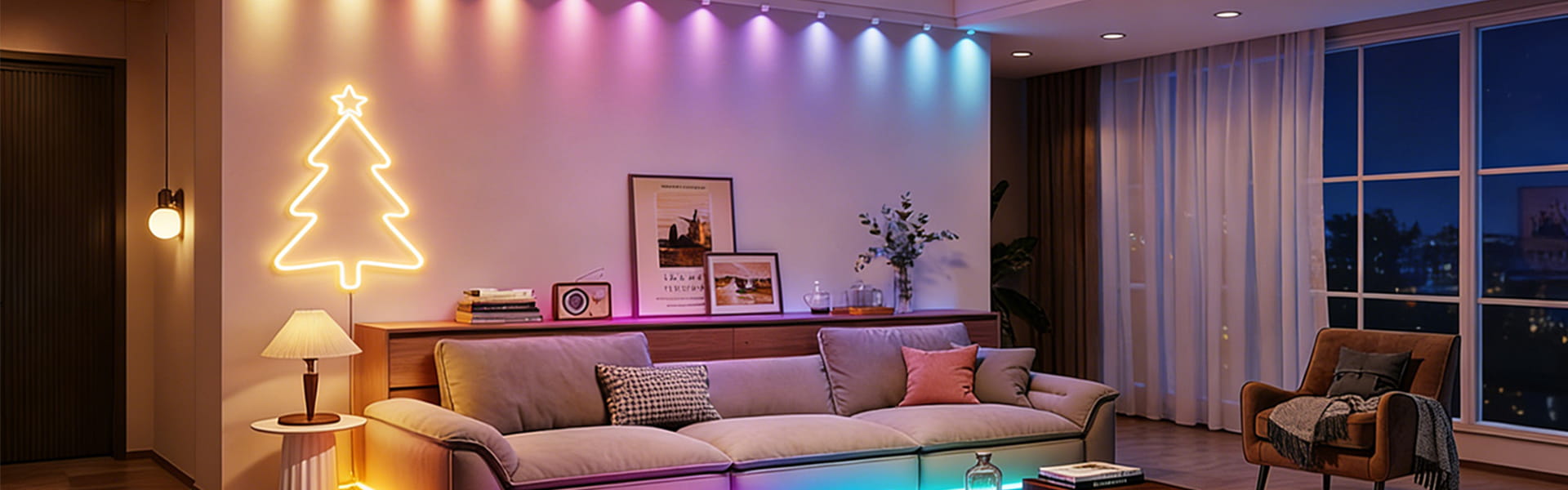
Color temperature is one of the most important factors in smart indoor lighting, because it directly affects comfort, visibility, and how a space is used throughout the day. Unlike traditional lighting, Smart Lighting allows users to adjust color temperature dynamically, which makes comparison and correct selection more important than choosing a single fixed value. This article compares common indoor color temperature ranges, explains how they perform in real home environments, and provides practical buying guidance.
Color temperature is measured in Kelvin and typically falls into three practical ranges for indoor lighting: warm white, neutral white, and cool white. Each range performs differently in daily use.
Smart indoor lighting works best when these ranges are used intentionally rather than interchangeably. Comparing them side by side helps users make more informed decisions.
| Color Temperature Range | Visual Appearance | Best Use Areas | Strengths in Daily Use | Points to Consider |
|---|---|---|---|---|
| 2700K–3000K | Warm white, soft yellow tone | Bedrooms, living rooms, lounges | Comfortable for long use, reduces glare, supports evening relaxation | Not ideal for detailed tasks or work-focused areas |
| 3500K–4000K | Neutral white, balanced tone | Kitchens, dining areas, hallways | Good balance between comfort and clarity, suitable for all-day use | Can feel flat if used alone in relaxation spaces |
| 5000K–6500K | Cool white, bright and crisp | Home offices, study areas, task zones | Improves visibility, supports focus and detail work | Overuse can feel harsh, especially at night |
This comparison shows that no single color temperature fits every situation. Smart lighting systems provide value by allowing these ranges to be adjusted easily.
Warm white lighting creates a softer environment that works well in spaces where people spend long periods relaxing. It reduces harsh contrast and is easier on the eyes during evening hours.
Neutral white lighting supports mixed-use spaces where activities change throughout the day. It maintains clarity without feeling overly bright, which makes it suitable for shared family areas.
Cool white lighting enhances detail visibility and alertness. It works best in focused task environments but should be used selectively rather than across the entire home.
Smart lighting allows these effects to be used at the right time instead of locking the home into one lighting condition.
One of the main advantages of smart indoor lighting is the ability to switch between color temperature ranges without changing fixtures.
Instead of buying different bulbs for different rooms, users can rely on one adjustable product. Morning lighting can be cooler, daytime lighting neutral, and evening lighting warmer, all using the same fixtures.
Surplife smart indoor lighting products are designed with wide CCT ranges and stable adjustment, allowing consistent performance across bulbs, ceiling lights, downlights, and floor lamps.
This approach supports both individual homes and bulk purchase projects where flexibility and consistency are required.
When selecting smart indoor lighting, color temperature should be matched to how each space is used rather than personal preference alone.
Practical guidance includes:
Choose products that support 2700K–4000K for bedrooms and living rooms to allow both relaxation and general use
Choose products that support 3500K–5000K for kitchens and dining areas where clarity and comfort are equally important
Choose products that support 5000K and above for dedicated work or study areas, used primarily during daytime
For homes with open layouts, selecting lights with adjustable color temperature helps maintain visual consistency while still supporting different activities.
Consistency becomes especially important when multiple fixtures are visible at the same time.
Smart lighting systems allow grouped control so that ceiling lights, floor lamps, and other fixtures share the same color temperature. This avoids visual mismatch and creates a more unified indoor environment.
For B-end customers managing residential projects, serviced apartments, or long-term rentals, consistent color temperature behavior across product categories helps maintain a predictable user experience across units.
As a manufacturer and solution provider, Surplife offers smart lighting across multiple categories with aligned color temperature performance, supporting both small-scale homes and project-based lighting plans.
When evaluating smart indoor lighting products, color temperature should be reviewed as a functional range rather than a single value.
Key points to check include:
Supported Kelvin range and adjustment stability
Smooth transitions between warm and cool settings
Consistent output across different fixture types
Compatibility with scenes and schedules
Products that support flexible adjustment provide more long-term value than fixed-temperature options, especially in homes where lighting needs change throughout the day.
There is no single best color temperature for smart indoor lighting. The most effective approach is choosing lighting that supports multiple color temperature ranges and allows easy adjustment based on room function and daily routines.
By comparing warm, neutral, and cool white lighting and matching them to real use cases, users can build indoor lighting that supports comfort, clarity, and flexibility. With a comprehensive smart lighting portfolio designed for both residential use and scalable projects, Surplife enables consistent and practical color temperature control across modern indoor environments. If you need more advice about interior lighting, please contact us. We would be happy to assist you.