
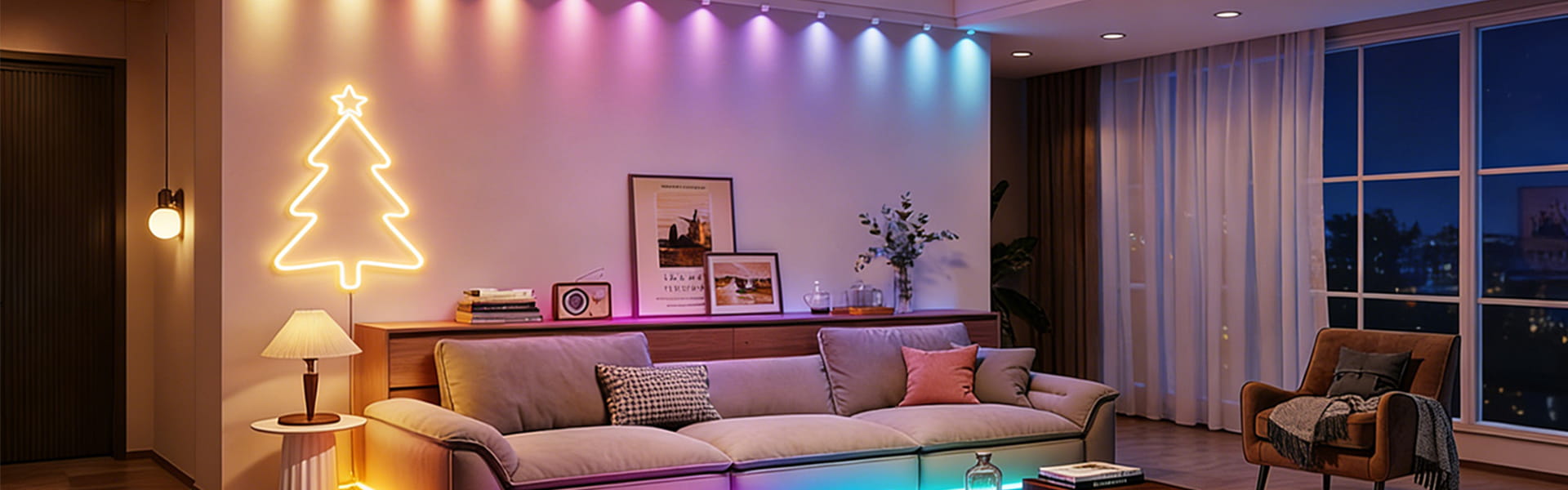
Smart Lighting systems have become an integral part of modern residential design, transforming lighting from a simple utility into an adaptive, responsive, and personalized home feature. Unlike traditional lighting systems that rely on fixed wiring and manual switches, smart lighting systems combine LED light sources, wireless communication modules, software platforms, and automation logic to create a more flexible and intelligent lighting experience.
In modern homes, smart lighting is not only about turning lights on and off remotely. It is about how lighting responds to daily routines, supports different activities, improves comfort, and integrates naturally into how people live. Surplife smart lighting solutions are designed around this concept, covering multiple residential lighting types such as smart bulbs, downlights, ceiling lights, floor lamps, and Decorative Lighting, all aimed at practical home use.
A smart lighting system is built around three essential layers: smart lighting devices, wireless communication, and a control platform.
At the device level, each smart light contains an LED light source, a power management unit, and an embedded control module. This control module allows the light to receive and interpret digital commands rather than relying solely on physical switches. These commands define how the light behaves, including brightness level, color temperature, color output, and operational timing.
The communication layer enables these devices to receive instructions wirelessly. Depending on the product design, this may involve WiFi, Bluetooth, or hybrid communication methods. This wireless structure eliminates the need for complex rewiring and allows lighting systems to be adapted to different home layouts.
The control platform, usually a mobile application, connects users to the entire system. It translates user actions into commands that are sent to individual lights or groups of lights, forming the foundation of modern smart lighting operation.
Wireless connectivity is what allows smart lighting systems to function as a coordinated whole rather than isolated fixtures.
When a smart light is installed, it is paired with a control platform through a setup process. During this process, the light becomes part of a defined environment, such as a room or zone within the home. Once connected, the light can receive real-time commands and status updates.
In modern homes, this wireless approach offers several advantages:
Lighting can be installed or relocated without structural changes
Control is no longer limited to wall switch locations
Multiple lighting types can operate under one unified system
Surplife smart lighting products are designed to support stable wireless connectivity across residential spaces, ensuring reliable communication even as homes grow or layouts change.
The control application is the operational center of a smart lighting system.
Instead of managing lights individually through switches, homeowners interact with lighting through a centralized digital interface. From a single screen, users can view all connected lights, organize them by room, and apply adjustments instantly.
This centralized approach changes how lighting is used in daily life. Adjustments that once required moving between rooms can now be made in seconds. Lighting states can be checked at a glance, and multiple lights can be controlled simultaneously.
Common control functions include:
Switching individual or grouped lights on and off
Adjusting brightness with precision
Selecting color temperature or RGB color output
Renaming and reorganizing lights as home layouts evolve
For modern households, centralized control reduces complexity while increasing flexibility, making lighting management intuitive rather than technical.
Scenes are a defining feature of how smart lighting systems work in modern homes.
A lighting scene is a preset configuration that defines how one or more lights behave together. Instead of adjusting each light manually, users activate a scene that instantly creates a specific lighting environment.
Scenes allow lighting to adapt to activities and moods. For example, softer lighting supports relaxation in the evening, balanced lighting improves focus during work hours, and decorative lighting enhances social spaces.
From a system perspective, scenes work by storing predefined parameters within the control platform. When a scene is activated, the platform sends synchronized commands to all relevant lights, ensuring consistent results across the space.
Surplife smart lighting solutions are structured to support scene-based control across different lighting forms, enabling homeowners to maintain visual harmony even when using multiple fixture types.
Automation is where smart lighting systems move beyond manual interaction and begin to work proactively.
In modern homes, lighting often follows predictable patterns. Smart lighting systems allow these patterns to be translated into schedules and routines. Lights can turn on, adjust, or turn off automatically based on time of day or recurring habits.
This routine-based operation improves convenience and reduces unnecessary energy use. Homeowners no longer need to remember to adjust lighting for common situations, as the system handles these actions automatically.
Automation also creates smoother transitions between different lighting states, supporting a more natural and comfortable living environment. Over time, lighting becomes less of a task and more of a background system that quietly supports daily life.
Modern homes often use multiple light sources within a single space. Smart lighting systems address this complexity through logical grouping.
Grouping allows multiple lights to be controlled as a single unit, even if they are physically separate fixtures. Lights can be grouped by room, zone, or functional area, creating cohesive lighting behavior across larger spaces.
This coordinated control is especially useful in open-plan living areas, kitchens with multiple ceiling lights, or hallways that span several fixtures. Adjustments made to a group apply instantly to all included lights, ensuring uniform brightness and color output.
Surplife’s smart lighting product structure supports grouping across different categories, helping homeowners achieve consistent lighting effects throughout the home without manual synchronization.
Smart lighting systems enhance the inherent efficiency of LED technology by adding intelligent control mechanisms.
Rather than operating at full output continuously, smart lights can be dimmed, scheduled, or turned off automatically when not needed. This targeted usage reduces energy waste and supports more efficient household energy management.
Because smart systems allow precise control, homeowners can fine-tune lighting to match actual needs instead of relying on fixed-output fixtures. Over time, this leads to lower electricity consumption while maintaining visual comfort and functionality.
Energy efficiency in smart lighting is not achieved through reduced performance, but through smarter operation aligned with real-life usage patterns.
In modern homes, smart lighting systems are designed to blend seamlessly into daily routines rather than disrupt them.
As users become familiar with scenes and automation, lighting interaction shifts from active control to passive experience. Lights respond automatically, adjust smoothly, and support activities without constant user input.
This integration is what distinguishes smart lighting systems from traditional lighting upgrades. The system adapts to how people live, rather than requiring people to adapt to the lighting.
Surplife smart lighting solutions are developed with this residential focus in mind, emphasizing usability, stability, and adaptability across different home environments.
Smart lighting systems in modern homes work by combining connected lighting hardware, wireless communication, centralized software control, and intelligent automation.
Through structured connectivity, app-based control, scene customization, scheduling, grouping, and energy-aware operation, smart lighting transforms lighting into a responsive and adaptive part of everyday home life.
With a comprehensive range of smart lighting products designed for residential use, Surplife enables homeowners to build lighting systems that are flexible, efficient, and aligned with modern living habits, supporting comfort, functionality, and personalization throughout the home.