
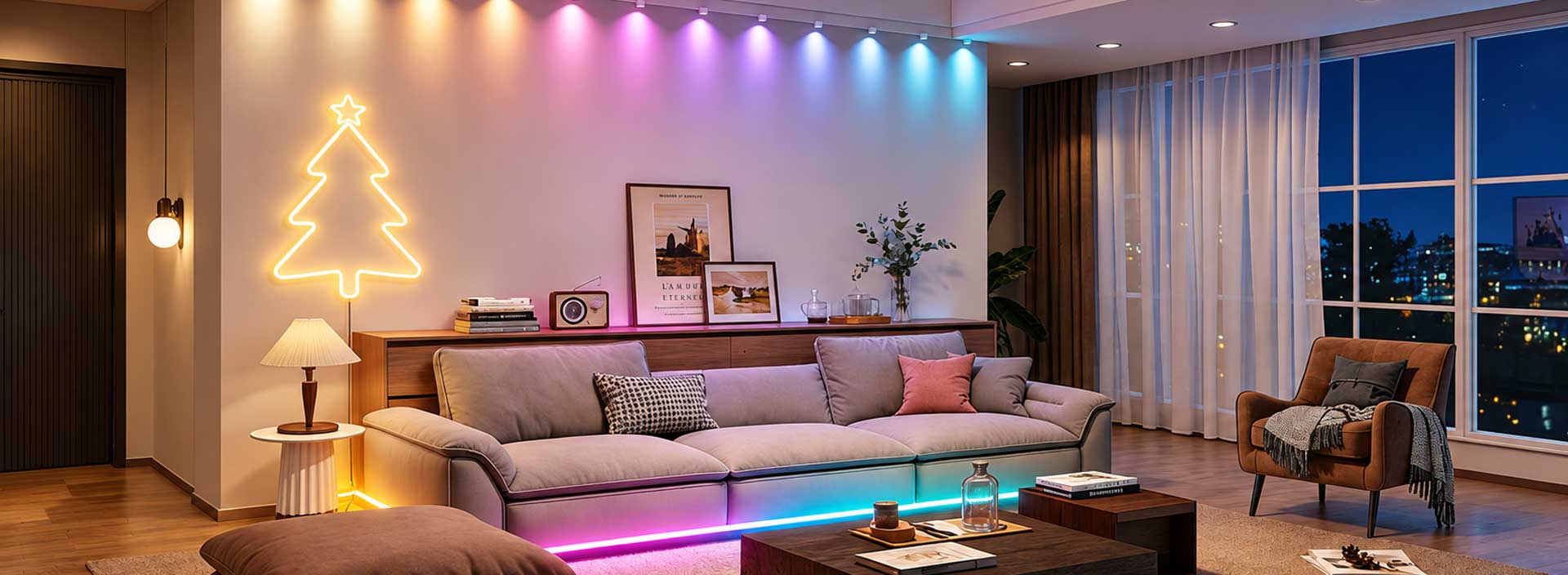
A modular Smart Lighting system is a flexible lighting architecture that combines independent hardware modules, intelligent controllers, and software platforms to create scalable lighting solutions. Unlike fixed lighting systems, modular designs allow users to add, remove, or adjust components according to changing application requirements.
This approach is becoming increasingly important for spaces that require flexible layouts, customized lighting scenes, and long-term system expansion. From commercial environments to smart buildings, modular structures provide easier installation and maintenance while supporting advanced IoT functions.
The basic concept of modular lighting is dividing the entire system into independent but connected units. Each module performs specific functions, such as light control, communication, sensing, or data management.
When these modules work together, the lighting system can respond to different requirements without rebuilding the entire infrastructure.
A typical modular structure includes:
Lighting modules that provide illumination and adjustable lighting effects.
Control modules that manage brightness, color temperature, and operating modes.
Communication modules that connect devices through wireless or wired networks.
Software platforms that allow monitoring, configuration, and automation.
This structure creates a more adaptable system compared with traditional fixed lighting installations.
Space requirements often change after installation. Offices may need new work areas, retail stores may adjust product displays, and commercial buildings may require different lighting schedules during different seasons.
A flexible lighting system design allows these changes to be completed with fewer modifications. Instead of replacing the whole lighting network, users can upgrade individual modules or adjust software settings.
The advantages of modular design include:
| Feature | Benefit |
|---|---|
| Expandable Structure | Additional devices can be added when needed |
| Independent Modules | Easier maintenance and replacement |
| Software Configuration | Lighting scenes can be updated remotely |
| Multiple Control Options | Supports apps, panels, and automated systems |
This flexibility makes modular solutions suitable for projects where future requirements cannot be fully predicted during initial planning.
Different environments have different lighting requirements. Modular systems are designed to adapt to multiple scenarios.
Commercial spaces often use modular lighting for display areas, offices, hotels, and entertainment environments. Different zones can have independent brightness levels and scene settings.
Residential applications benefit from personalized lighting control. Users can create different scenes for relaxation, work, entertainment, or daily routines.
Industrial and public environments may require centralized monitoring and large-scale device management. Modular structures simplify system expansion when additional areas need to be connected.
An iot modular lighting solution connects lighting devices with digital platforms, enabling real-time communication and intelligent management.
Through IoT connectivity, lighting systems can support functions such as remote control, automated scheduling, device grouping, and data analysis. This helps improve operation efficiency and reduces the difficulty of managing multiple lighting areas.
For example, a building manager can adjust lighting settings across different floors without manually checking each area. A retail operator can update lighting scenes during different campaigns through centralized software.
Surplife applies intelligent IoT technologies to develop lighting platforms that support connected control, scene management, and customized applications.
Selecting a modular system requires consideration of both current requirements and future development. Important factors include:
Number of lighting devices and control zones
Communication stability in the installation environment
Compatibility with existing smart systems
Required automation functions
Maintenance and expansion convenience
A well-designed modular system should balance performance, reliability, and flexibility. Overly complicated systems may increase management difficulty, while limited systems may restrict future upgrades.
Lighting requirements continue to change as buildings, businesses, and user expectations develop. Modular systems provide a foundation that can evolve with these changes.
Instead of treating lighting as a fixed installation, modular architecture transforms it into an adjustable digital system. New functions, additional devices, and updated control methods can be introduced gradually.
A modular approach allows lighting systems to remain efficient and adaptable, making them a practical choice for applications that value flexibility, intelligent management, and future expansion.