
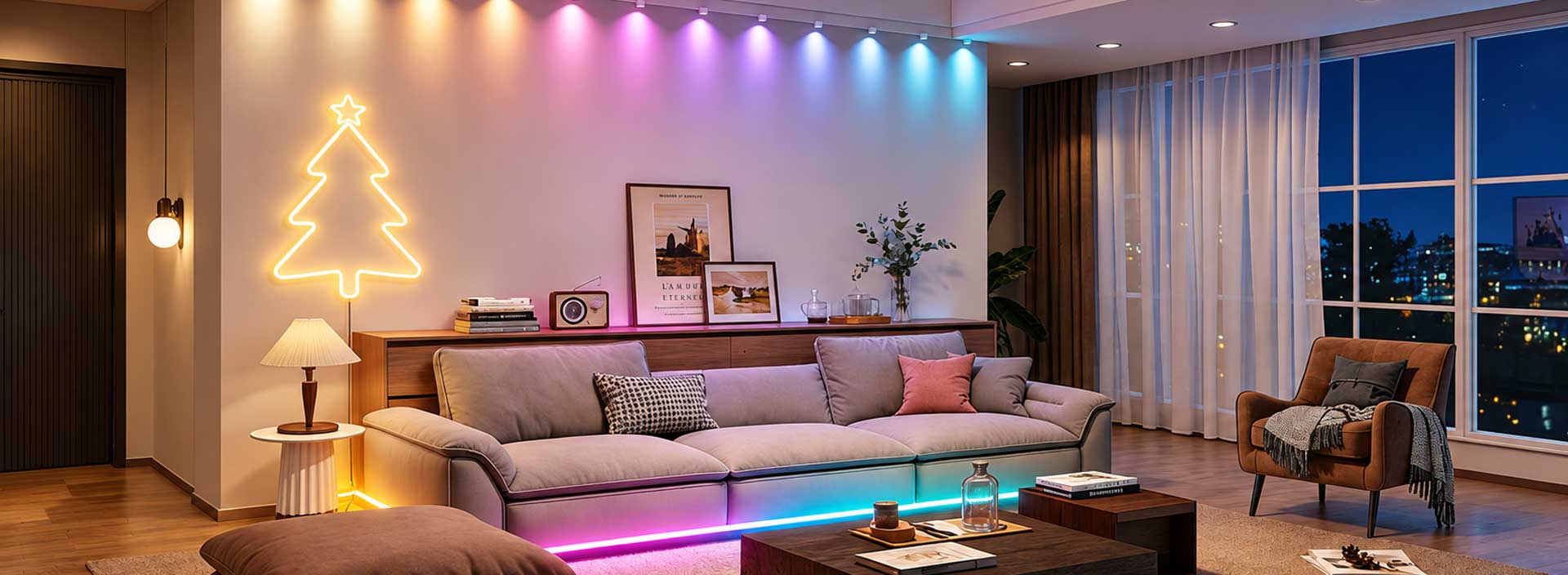
Traditional lighting systems can be upgraded into intelligent environments by adding smart controllers, wireless communication modules, and centralized management platforms without completely replacing existing lighting layouts. A practical upgrade plan focuses on compatibility, installation efficiency, and future expansion, allowing spaces such as offices, commercial buildings, and smart homes to achieve better control, energy management, and user experience.
Traditional lighting usually relies on manual switches, fixed schedules, or independent control circuits. Although these systems can provide basic illumination, they lack flexibility when users need different lighting scenes, remote management, or energy optimization.
With the development of IoT technology, lighting is no longer limited to turning lights on and off. Modern systems can connect lighting devices with sensors, applications, and cloud platforms to create automated lighting environments. An upgrade to Smart Lighting system helps existing spaces improve operational efficiency while reducing unnecessary energy consumption.
For many renovation projects, replacing every lamp is not always the most efficient approach. A well-designed conversion plan can combine existing hardware conditions with new control technologies to achieve gradual smart transformation.
A successful traditional lighting conversion solution normally includes several technical stages. Each stage affects system stability and long-term maintenance.
| Upgrade Stage | Main Work | Key Considerations |
|---|---|---|
| System Assessment | Check existing lamps, wiring, and control methods | Confirm compatibility before installation |
| Control Module Integration | Add smart switches, controllers, or gateways | Select suitable communication protocols |
| Network Setup | Connect devices through WiFi, Bluetooth, or other networks | Ensure stable data transmission |
| Scene Configuration | Set brightness, color, and automation rules | Match user requirements and application scenarios |
| Testing & Optimization | Verify device response and system performance | Adjust parameters before final operation |
The most important step is selecting the right control architecture. Small spaces may only require wireless control modules, while larger commercial areas may need zone management, cloud monitoring, and multiple user permissions.
The iot lighting upgrade process allows different lighting devices to communicate through connected networks. Instead of controlling each light separately, users can manage multiple devices through applications, control panels, or automated schedules.
For example, office lighting can automatically adjust according to working hours, while retail spaces can create different lighting scenes for product displays, promotions, or customer flow changes. Outdoor lighting systems can also integrate sensors to respond to environmental conditions.
A complete smart lighting system usually combines hardware, software, and communication technologies. This integrated approach improves flexibility because future functions can often be added through software updates rather than major hardware replacement.
Before starting an upgrade project, several technical factors should be evaluated:
Existing electrical structure and installation conditions
Required control distance and communication method
Number of lighting zones and devices
Future expansion requirements
Compatibility with other smart devices
A common mistake is focusing only on smart functions while ignoring system scalability. A lighting solution should not only solve current needs but also support future applications such as energy monitoring, scene automation, and centralized management.
Surplife develops smart lighting solutions that combine intelligent control technologies with flexible application scenarios, helping users create more connected lighting environments.
The upgrade time depends on project size, existing infrastructure, and system complexity. Simple residential upgrades may require only device replacement and configuration, while commercial projects usually need planning, installation testing, and system adjustment.
A phased upgrade strategy is often more practical for large spaces. It allows different areas to be converted gradually while maintaining normal operation.
The transition from traditional lighting to intelligent control is not only a technology replacement but also a management improvement. A properly planned upgrade can provide better lighting experiences, easier operation, and more efficient energy usage for years after installation.