
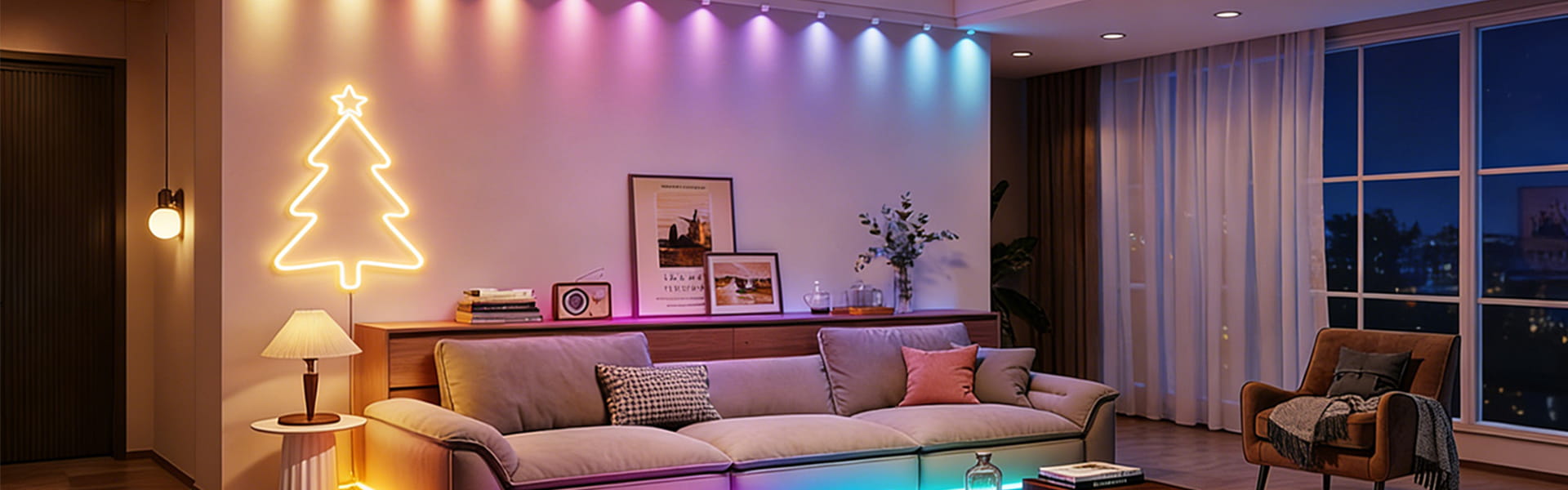
Smart Lighting promises convenience, flexibility, and better control, but the setup stage is where many users encounter frustration. Most problems do not come from defective products, but from mismatches between lighting systems, home environments, and user expectations. Understanding common setup issues and their practical solutions helps avoid unnecessary troubleshooting and improves long-term reliability.
This article reviews the most frequent smart lighting setup problems found in real homes, explains why they occur, and provides clear solutions based on everyday use rather than ideal conditions. It also highlights how Surplife approaches system-level compatibility and deployment support, which is especially relevant for larger homes and project buyer scenarios.
One of the most common problems appears during the first pairing process. Smart lights may fail to connect, disconnect repeatedly, or appear offline in the app.
This usually happens because smart lights rely on stable local network conditions during setup. Issues often include incorrect WiFi band selection, weak signal strength, or temporary network congestion.
Practical solutions include:
Ensuring the phone and smart light are on the same network during setup
Using a stable 2.4 GHz network when required
Placing the router closer during initial pairing
Avoiding setup during heavy network usage
Once pairing is complete, many connectivity issues disappear because the device no longer requires constant setup-level communication.
Some users find that lights connect successfully but later respond slowly or inconsistently.
This is often related to network load or unclear device grouping rather than hardware faults. When many devices share the same network, delayed responses may occur if control logic is not optimized.
Effective solutions include:
Organizing lights clearly by room and function
Avoiding duplicate or unclear device names
Reducing unnecessary third-party integrations
Keeping firmware updated to maintain compatibility
Well-structured grouping improves both app and voice control reliability.
In rooms with multiple smart lights, users sometimes notice slight differences in brightness or color temperature, even when settings are the same.
This issue typically arises from mixing different product generations, light types, or manufacturers. Even small differences become noticeable when lights are placed close together.
Recommended approaches:
Use the same model or product series within one visible space
Avoid mixing white-only and RGB lights without careful grouping
Group lights so adjustments apply simultaneously
For larger homes or multi-room installations, consistency matters more than individual feature variety.
Automation is one of the most useful features of smart lighting, but it can also cause confusion when multiple schedules overlap.
Common problems include lights turning on unexpectedly, ignoring manual input, or reverting to scheduled states too quickly.
Clear solutions include:
Limiting the number of active schedules per room
Reviewing automation priority settings
Avoiding duplicate schedules created by different users
Testing routines at least once before daily use
Automation works best when it follows simple, predictable patterns rather than complex conditional logic.
Voice assistants often work well for basic commands, but setup problems can reduce reliability.
Typical issues include voice commands controlling the wrong lights, failing to recognize room names, or responding inconsistently.
Improvement steps include:
Assigning lights to rooms in both the lighting app and the voice assistant app
Using clear, distinct room names
Syncing devices after changes are made
Keeping voice control for simple actions such as on, off, and dim
Voice control complements app control but should not replace structured setup.
Smart lights depend on constant power to remain connected. Frequent wall switch use can interrupt this, causing lights to appear offline.
This is a common issue in homes where multiple users are not familiar with smart lighting behavior.
Practical solutions include:
Educating household members on proper use
Using wall switches consistently in the on position
Setting default power-on behavior in the app
Choosing fixtures designed for frequent use scenarios
Once users adapt, this issue typically disappears.
Smart lighting works smoothly with a few devices, but problems can appear as systems grow.
Users may experience slower response times, more frequent disconnections, or management complexity when many lights are added without planning.
Better scaling practices include:
Adding lights gradually rather than all at once
Keeping room and zone structures consistent
Using products designed to operate within the same ecosystem
For households expanding room by room, or for wholesale deployments, system consistency becomes more important than individual features.
Many setup problems are avoidable with a system-level approach rather than device-by-device selection.
Surplife designs its smart lighting products to operate within a unified control framework, reducing compatibility gaps between bulbs, ceiling lights, downlights, and floor lamps. This helps maintain consistent behavior as systems expand.
For customers managing larger installations or structured residential projects, Surplife acts as a solution provider by supporting product matching, stable supply, and predictable performance across deployments. This reduces setup friction and long-term maintenance effort.
Most smart lighting setup problems are not caused by faulty devices but by unclear structure, network limitations, or overcomplicated automation. By understanding common issues and applying practical solutions, users can achieve stable and reliable smart lighting performance.
A well-planned setup, consistent product selection, and simple control logic lead to better daily experience. With a system-oriented product portfolio and support for scalable use cases, Surplife helps smart lighting setups remain manageable, reliable, and effective for both everyday homes and project-based environments. If you would like to learn more about how to control and set up smart lights, please contact us.