
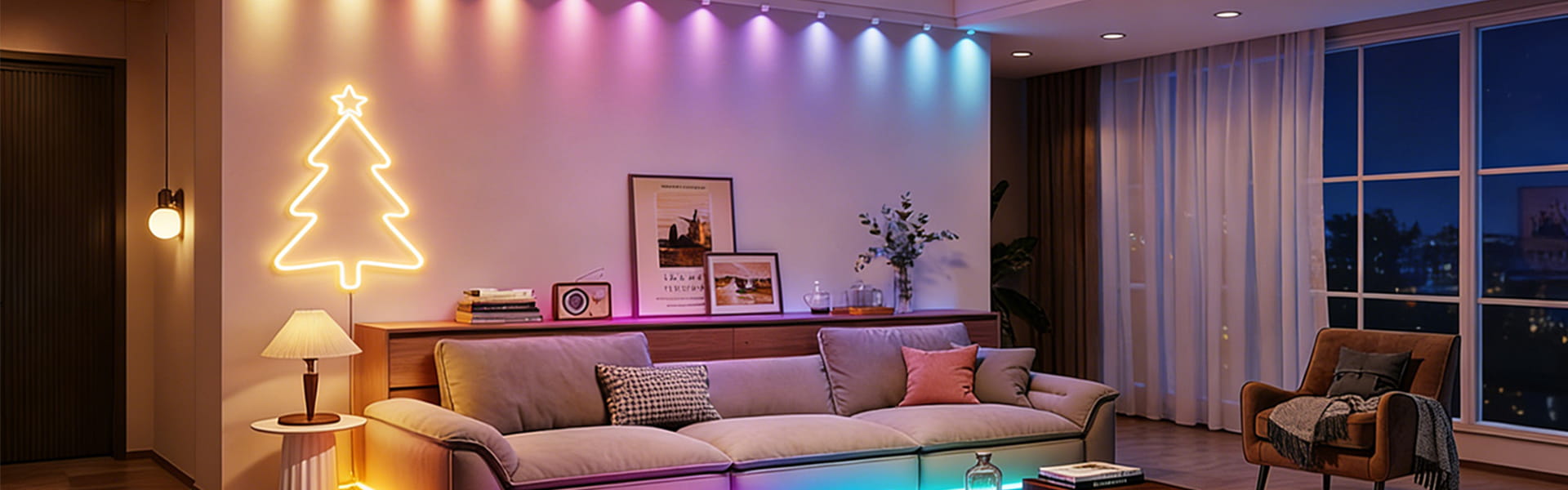
Interior lighting atmosphere is not created by brightness alone. It is shaped by how light changes over time, how different light sources interact, and how easily lighting adapts to daily life. Smart lights enhance interior lighting atmosphere by giving users controlled flexibility rather than fixed lighting states. Instead of forcing a room to look the same all day, Smart Lighting allows the atmosphere to evolve naturally with use, time, and activity.
In modern homes, smart lighting is increasingly used as part of the core lighting plan rather than as an add-on. Surplife develops smart lighting products with this everyday, system-based use in mind, supporting both residential users and B-end customers who require consistent lighting behavior across multiple rooms or project-based environments.
Traditional interior lighting is static. Once installed, the room’s atmosphere depends on a fixed brightness level and a fixed color tone. Any change requires manual switching, replacing bulbs, or adding extra fixtures.
Smart lights change this dynamic by allowing the same light source to operate differently throughout the day. Brightness, color temperature, and color output can shift smoothly without changing fixtures or layout. As a result, atmosphere becomes adaptive rather than fixed.
In daily use, this means a room can feel open and clear during the day, calm and relaxed in the evening, and soft and quiet at night, all using the same lighting points. This adaptability is the foundation of how smart lights enhance interior atmosphere.
Brightness is the most direct factor influencing atmosphere.
High brightness emphasizes clarity and visibility but can feel intense during rest periods. Lower brightness reduces visual pressure and makes a space feel calmer and more contained. Smart lights allow users to move between these states smoothly rather than relying on a single compromise setting.
In living rooms, lowering brightness in the evening reduces contrast between walls, furniture, and screens. In bedrooms, controlled low brightness supports winding down without full darkness. In dining areas, moderate brightness creates a comfortable environment without flattening the space.
Because smart lights allow precise dimming, atmosphere can be adjusted incrementally rather than abruptly, which improves comfort during long periods of use.
Color temperature influences how warm or cool a space feels, even when brightness remains unchanged.
Warm tones tend to feel softer and more relaxed, while neutral tones feel balanced and clear. Cooler tones support alertness and visual focus. Smart lights enhance atmosphere by allowing these tones to be used intentionally rather than permanently.
Instead of choosing one color temperature for a room, smart lighting allows color temperature to follow daily rhythms. A space can feel more active during the day and more restful at night without adding separate fixtures.
This control is especially important in homes where rooms serve multiple purposes, such as living rooms that function as workspaces during the day and relaxation areas in the evening.
RGB color capability is often associated with Decorative Lighting, but its impact on atmosphere depends on how it is used.
In daily home lighting, color is usually applied subtly. Soft color accents can add depth to a room without overwhelming it. For example, a gentle color wash behind a sofa or near a wall can change the feel of a space while keeping the main lighting neutral.
Smart lights allow color to be introduced temporarily and removed easily. This makes color useful for occasional ambience, seasonal changes, or social settings without permanently altering the room’s character.
Atmosphere improves when color remains controlled and repeatable rather than random or overly saturated.
Atmosphere improves when light comes from multiple levels rather than a single source.
Smart lighting supports layered lighting by allowing different fixtures to operate at different brightness and tone levels while remaining coordinated. Ceiling lights can provide base illumination, while floor lamps, wall lights, or secondary sources add depth and balance.
When these layers are controlled together through scenes or groups, the room feels visually balanced rather than unevenly lit. Smart lights enhance this balance by keeping layers synchronized instead of competing.
Surplife supports layered lighting through a complete smart lighting portfolio, allowing bulbs, ceiling lights, downlights, and floor lamps to work together within the same control structure. This system-level approach is valuable for both individual homes and multi-room deployments.
A good lighting atmosphere is not created once; it is repeated every day.
Smart lights enhance interior atmosphere by making preferred lighting states easy to recall. Scenes store brightness and color settings so that the same atmosphere can be activated consistently without manual tuning.
Consistency matters more than novelty. When lighting behaves predictably, users trust it and rely on it as part of their routine. This is especially important in homes with multiple occupants or in environments managed at scale, such as serviced apartments or long-term residential projects.
For B-end customers, repeatability across units reduces variability and improves overall user experience.
| Aspect | Traditional Lighting | Smart Lighting |
|---|---|---|
| Brightness control | Fixed or limited | Precisely adjustable |
| Color temperature | Single fixed tone | Adjustable across daily use |
| Atmosphere changes | Manual or fixture-based | Scene-based and repeatable |
| Layer coordination | Separate controls | Grouped and synchronized |
| Daily consistency | Depends on user action | Preset and reliable |
This comparison highlights why smart lighting is more effective at shaping atmosphere over time rather than only at installation.
Smart lights enhance interior atmosphere differently depending on the room.
In living rooms, they support transitions between activity and rest. In bedrooms, they help create calm environments without relying on harsh overhead lighting. In dining spaces, they adjust tone and brightness to match time and occasion. In hallways and transitional areas, they provide gentle lighting that feels safe without being intrusive.
The common factor is adaptability. Atmosphere improves when lighting responds to use rather than forcing one fixed condition across all situations.
Smart lights enhance interior lighting atmosphere by turning light into a flexible, responsive element of the home. Through precise brightness control, adjustable color temperature, selective use of color, and coordinated layered lighting, smart lighting allows rooms to feel different at different times without changing fixtures or layout.
With a system-based smart lighting portfolio designed for both residential use and scalable deployments, Surplife enables consistent, repeatable lighting atmospheres that support daily life rather than distract from it. Smart lighting improves interior atmosphere not by adding complexity, but by making the right lighting state easy to achieve every time.