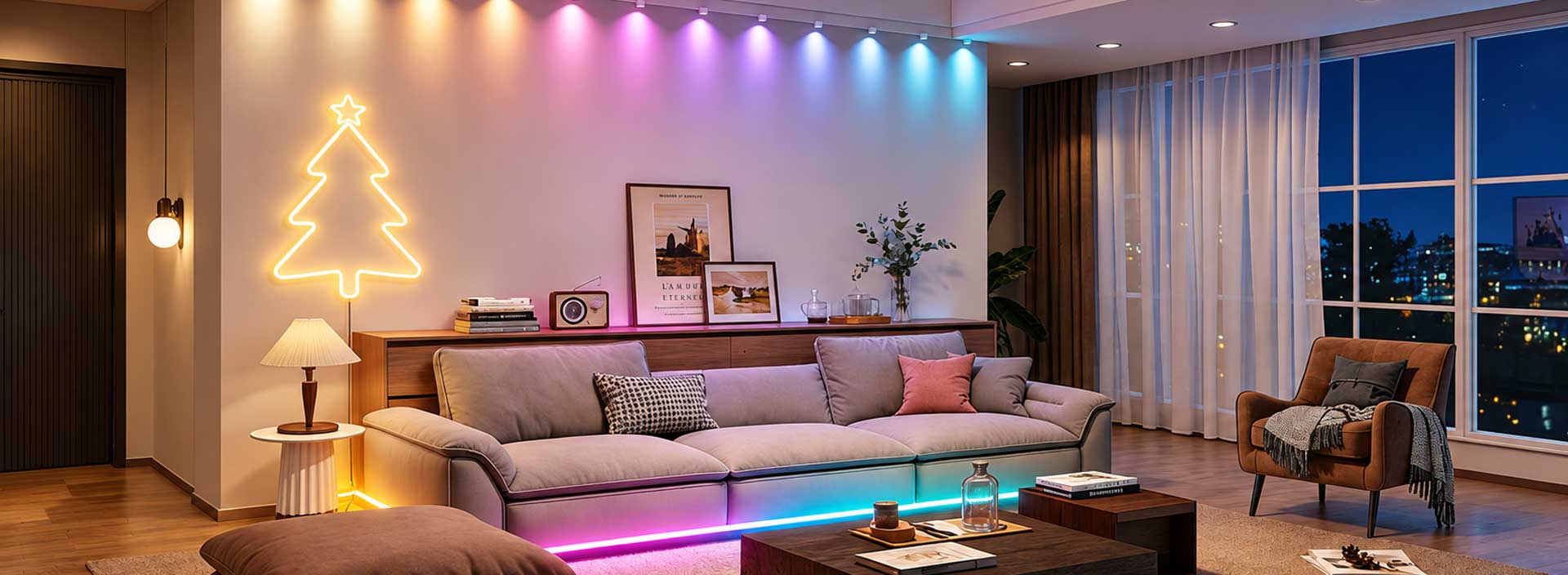
Smart lighting products are no longer judged only by brightness, color, or appearance. The real value now comes from how well the lighting system connects with apps, cloud platforms, scene control, voice ecosystems, and long-term product upgrades.
Project-based smart lighting needs more than a standard mobile control page. A custom lighting control app should match the lighting product, installation scene, user role, control logic, and long-term maintenance needs.
Smart lighting is no longer judged only by brightness, color effects, or app control. Buyers now pay more attention to whether the complete system can work smoothly after installation, support different usage scenarios, and remain stable during long-term operation.
Stable smart lighting is not created by one single component. It comes from the coordination of LED hardware, controller design, wireless connection, firmware logic, app operation, cloud response, and installation planning. When a lighting system needs to serve homes, commercial spaces, decorative scenes, or engineering applications, stability becomes the first condition for user trust.
Smart lighting products are no longer defined only by hardware performance. The app has become the core interaction layer, shaping how users control, personalize, and experience lighting systems. Customization of the app is now a key strategy for brands that want to differentiate, improve retention, and build long-term ecosystems.
Selecting a lighting system supplier affects far more than product cost. It influences delivery stability, product consistency, software reliability, and long-term scalability. As smart lighting becomes more system-driven, supplier evaluation must go beyond basic manufacturing capability.
Lighting has moved from single-color output to dynamic, multi-zone control. RGBIC smart lighting technology represents this shift by allowing multiple colors to display on one strip or fixture at the same time, rather than forcing the entire product to show a single uniform color.
User expectations for connected lighting have shifted from simple control to seamless, intuitive interaction. A smart lighting app is no longer just a tool; it becomes the daily interface between users and their environment. When the experience feels slow, confusing, or inconsistent, even high-quality hardware loses its appeal.
Control of lighting has shifted from wall switches to digital interfaces where commands travel through networks instead of wires. What appears to be a simple tap on a phone screen actually involves a coordinated interaction between hardware, software, and cloud services.
Walk through any online marketplace or retail showroom and the pattern becomes clear. Many smart lighting products look similar, offer nearly identical functions, and rely on comparable control methods. For buyers, this creates confusion. For brands, it leads to price competition instead of value competition.
Smart lighting is no longer a single-product category. It has evolved into a connected system that combines devices, software, communication protocols, and user interaction into one unified structure. Brands that aim to stay competitive are no longer focused only on selling fixtures, but on delivering a complete smart lighting ecosystem solution that can scale across different applications and markets.
In smart lighting projects, the application layer determines how devices behave in real environments, how quickly users can respond to controls, and how stable the overall system feels under continuous usage.