
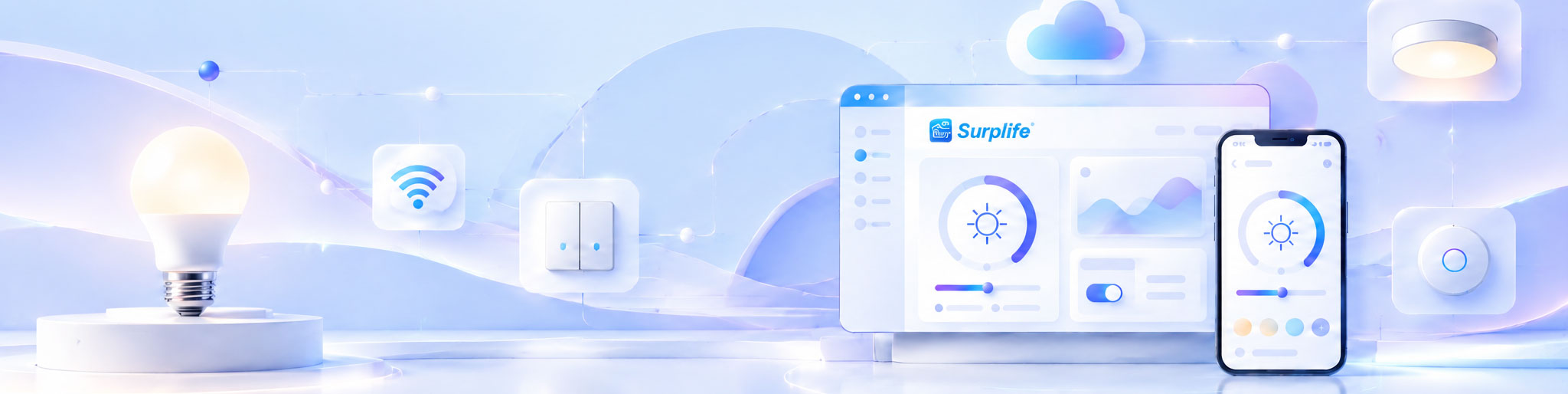
Lighting brands can differentiate Smart Lighting products by developing features that solve specific user problems rather than simply adding more colors, control modes, or connectivity options. Meaningful differentiation comes from combining distinctive lighting performance, intuitive app experiences, reliable device integration, product design, and application-specific functions. For manufacturers, the strongest strategy is to identify an underserved customer need and translate it into a product specification that competitors cannot easily replicate.
Many smart lighting products now offer similar basic functions, including wireless control, brightness adjustment, RGB colors, timers, and preset scenes. When several products provide nearly identical experiences, buyers have fewer reasons to choose one brand over another.
Competing mainly through lower prices can also reduce profit margins without creating lasting customer loyalty.
The challenge is that adding features does not automatically create product value. A lighting product with dozens of effects may still disappoint users if its app is difficult to operate or its connection frequently drops.
Product differentiation should therefore focus on the complete experience, from installation and daily operation to compatibility and long-term reliability.
Not every feature deserves investment. Brands should prioritize improvements that customers can recognize, use, and appreciate.
Five areas offer practical opportunities:
1. Distinctive Lighting Performance
Develop lighting effects that serve specific applications. For example, gaming products may emphasize synchronized RGBIC effects, while ambient lighting for home entertainment may prioritize smooth transitions and comfortable brightness.
2. More Flexible Control Functions
Provide meaningful customization through brightness curves, color adjustment, scheduling, scene editing, and group management. Flexible control is more valuable than simply increasing the number of preset modes.
3. Better Connectivity
Reliable pairing, stable wireless communication, and consistent multi-device operation can become important competitive advantages, particularly for products used across several rooms.
4. Improved Physical Design
Consider installation methods, connector structures, cable management, enclosure materials, and product dimensions. Practical design improvements can distinguish products even when their electronic functions are similar.
5. More Intuitive Software
A well-organized application should make essential controls easy to find. Clear device management, understandable settings, and responsive operation can improve the overall product experience.
A useful starting point is to examine the actual environment where the product will be used.
A gaming light, for example, should not be developed simply as another RGB lighting device. Its design may need to support synchronized effects, rapid scene switching, multiple lighting zones, and convenient control during gameplay.
Similarly, a smart LED strip intended for home decoration may benefit more from flexible installation, consistent color output, reliable scheduling, and simple household management.
The product development process should connect three elements:
Target User → Usage Problem → Product Function
This relationship prevents development teams from investing in features that look impressive in a specification sheet but provide little practical value.
A branded application can create a stronger product identity and provide greater control over the user experience. However, developing a completely independent app is not automatically the best choice for every product.
The decision depends on the intended positioning, required functions, budget, and long-term maintenance capability.
| App Strategy | Suitable Situation | Main Consideration |
|---|---|---|
| Existing App Platform | Products with standard control requirements | Faster development and lower initial investment |
| Branded App Customization | Brands seeking their own visual identity | Balance customization and development cost |
| Fully Custom APP | Products requiring distinctive functions or ecosystems | Higher engineering and maintenance responsibilities |
A customized app can support branded interfaces, personalized lighting scenes, product grouping, and specialized control functions.
However, brands should also consider software updates, operating system compatibility, cloud expenses, account management, and technical support. These ongoing responsibilities should be included in the product's commercial planning.
RGBIC technology provides independent color control across different sections of an LED strip, allowing multiple colors and dynamic effects to appear simultaneously.
This creates opportunities for more distinctive lighting experiences compared with products limited to displaying one uniform color at a time.
However, RGBIC technology alone is not a complete competitive advantage. The actual experience depends on LED configuration, controller capability, firmware processing, effect design, and synchronization performance.
For product development, brands can explore different effect libraries, adjustable animation speeds, segment control, and synchronization between compatible devices.
The important consideration is consistency. Dynamic effects should remain visually smooth and predictable across the supported operating conditions. Poor synchronization or uneven color transitions can undermine the value of otherwise advanced lighting features.
Customization allows brands to develop products that reflect their target market rather than competing with identical standard configurations.
Beyond changing product colors or adding logos, customization can involve hardware architecture, lighting functions, application interfaces, packaging, and accessories.
A product development project may begin with an established lighting platform and introduce selected modifications. This approach can provide meaningful differentiation without requiring every component to be designed from scratch.
Before development, brands should identify which elements genuinely need customization and which can remain standardized. This distinction helps control engineering costs and reduces unnecessary complexity.
A smart lighting oem manufacturer should be able to evaluate whether requested features are technically feasible and explain their impact on development time, production costs, and future maintenance.
A successful product strategy should extend beyond developing one attractive model. Brands need to consider how individual products fit into a wider range.
For example, a lighting brand may develop several product categories with different installation methods and applications while maintaining a consistent control experience.
Shared app functions, compatible controllers, and standardized communication architecture can simplify product management. At the same time, each category should offer a clear reason for customers to choose it.
A practical product portfolio can be organized around different customer needs:
Entry-level products: Focus on straightforward installation, essential control functions, and competitive pricing.
Mid-range products: Introduce more flexible lighting effects, customization, and multi-device management.
Premium products: Emphasize advanced synchronization, specialized control functions, distinctive design, and expanded integration capabilities.
This structure gives brands more opportunities to serve different market segments without developing completely unrelated product systems.
A product concept should be evaluated before substantial resources are committed to mass production.
Customer feedback, competitor product analysis, prototype testing, and small-scale market trials can help determine whether the proposed features provide meaningful value.
Three questions are particularly useful during evaluation:
Can customers identify what makes the product different without extensive explanation?
Does the main differentiating feature work reliably under actual usage conditions?
Is the improvement valuable enough to justify the additional development and manufacturing costs?
Prototype testing should cover both technical performance and user experience. A product may pass electrical and functional checks but still receive poor feedback because its installation process is complicated or its application is confusing.
Feedback should be used to refine the product specification before production approval.
Developing differentiated products often requires coordination between electronic engineering, firmware, mobile applications, product design, and manufacturing.
A suitable development partner should understand how these elements interact rather than treating each as an isolated service.
During supplier evaluation, brands should examine previous development capabilities, prototype support, software customization, component sourcing, quality control, and post-launch maintenance arrangements.
It is also important to clarify intellectual property ownership, source-code access, tooling responsibilities, and the handling of future product modifications.
These details determine whether a brand can continue improving its products independently or remains dependent on the original development arrangement.
Long-term differentiation rarely comes from one additional lighting effect or a temporary technology trend. It comes from consistently understanding customer requirements and translating them into products that are easier to install, more reliable to operate, and more suitable for specific applications.
Brands should regularly review customer feedback, product performance, market changes, and emerging control technologies. Improvements should be prioritized according to their commercial value rather than added simply to increase the number of advertised features.
The strongest smart lighting products combine recognizable design, useful functionality, stable connectivity, and an intuitive control experience. When these elements work together, differentiation becomes part of the product itself rather than just a marketing message.