
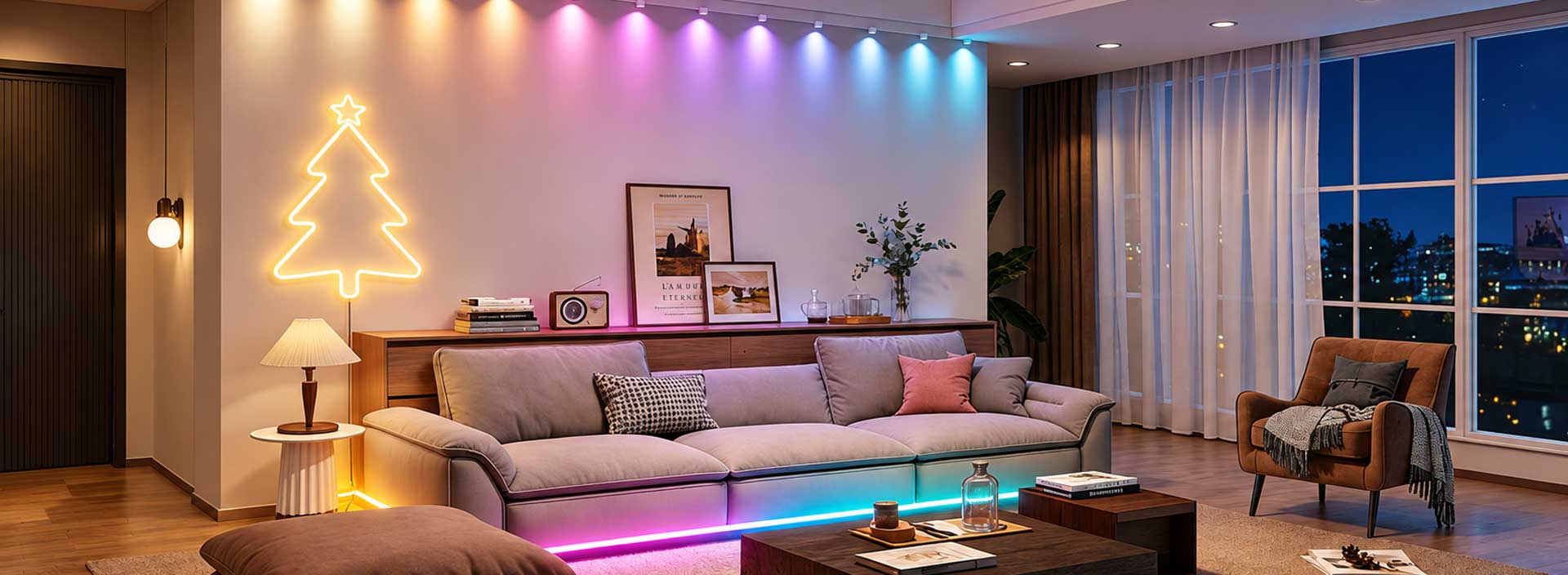
A Smart Lighting control system is the core technology that connects lighting devices, control equipment, and management platforms into one coordinated network. Unlike traditional lighting systems that rely mainly on manual switches, smart control systems allow users to automate lighting operation, manage different areas, and adjust settings according to real-time requirements.
The value of a lighting control system is not only controlling when lights turn on or off. It creates a structured method for managing brightness, schedules, scenes, energy usage, and connected devices across different environments.
A smart lighting control system works by collecting information, processing commands, and controlling lighting devices through connected technologies.
Sensors, controllers, communication modules, and software platforms work together to complete this process. Sensors provide environmental information, controllers execute commands, and software interfaces allow users to configure system behavior.
This connection creates a more intelligent lighting environment where operation is based on actual conditions rather than fixed manual actions.
A complete system usually includes several layers that work together.
The device layer contains lighting fixtures and sensors responsible for collecting information and producing lighting output. The control layer manages communication between different components. The management layer provides users with tools for configuration, monitoring, and adjustment.
| Component Type | Role In System Operation |
|---|---|
| Lighting Controllers | Send and execute lighting commands |
| Sensors | Detect occupancy and environmental changes |
| Communication Modules | Transfer data between devices |
| Management Software | Provide monitoring and configuration |
The combination of these components determines the overall performance and flexibility of the system.
Modern systems provide various control functions depending on application requirements.
Basic functions include remote switching and brightness adjustment, while advanced functions may include automatic scheduling, scene creation, energy monitoring, and integration with other building systems.
For commercial applications, different zones can operate independently. A building manager can create different settings for offices, meeting rooms, public areas, and outdoor spaces.
This flexibility allows lighting operation to match actual usage instead of following one fixed pattern.
Lighting is one of the most widely used systems in buildings, which makes effective management important. A smart control system provides better visibility into lighting operation and helps optimize daily usage.
Instead of checking each area manually, managers can view system information through a centralized platform. This improves maintenance efficiency and allows adjustments to be made faster.
For intelligent buildings, lighting control also creates opportunities for integration with other systems, such as automation platforms and energy management solutions.
Energy efficiency depends not only on the type of lighting equipment but also on how effectively the system is controlled.
Automation allows lighting operation to match actual demand. Lights can be reduced in unused areas, adjusted according to daylight availability, or scheduled based on building operation times.
A lighting control system manufacturer focuses on creating solutions that combine reliable hardware with flexible control functions, ensuring that the system can meet different application requirements.
Without an effective control system, lighting management may become inefficient as the number of devices increases.
Common challenges include inconsistent lighting settings, higher manual management requirements, and difficulty identifying operational problems.
A structured control system solves these issues by providing centralized management and clearer system visibility.
The selection process should focus on application needs rather than only available features. Factors such as building size, control requirements, communication method, and future expansion should be considered together.
A suitable system should provide reliable operation today while allowing additional functions to be introduced later.
Smart lighting control systems represent a shift from simple lighting operation toward intelligent environmental management. Through better control, automation, and integration, lighting becomes a more adaptable part of modern spaces.