
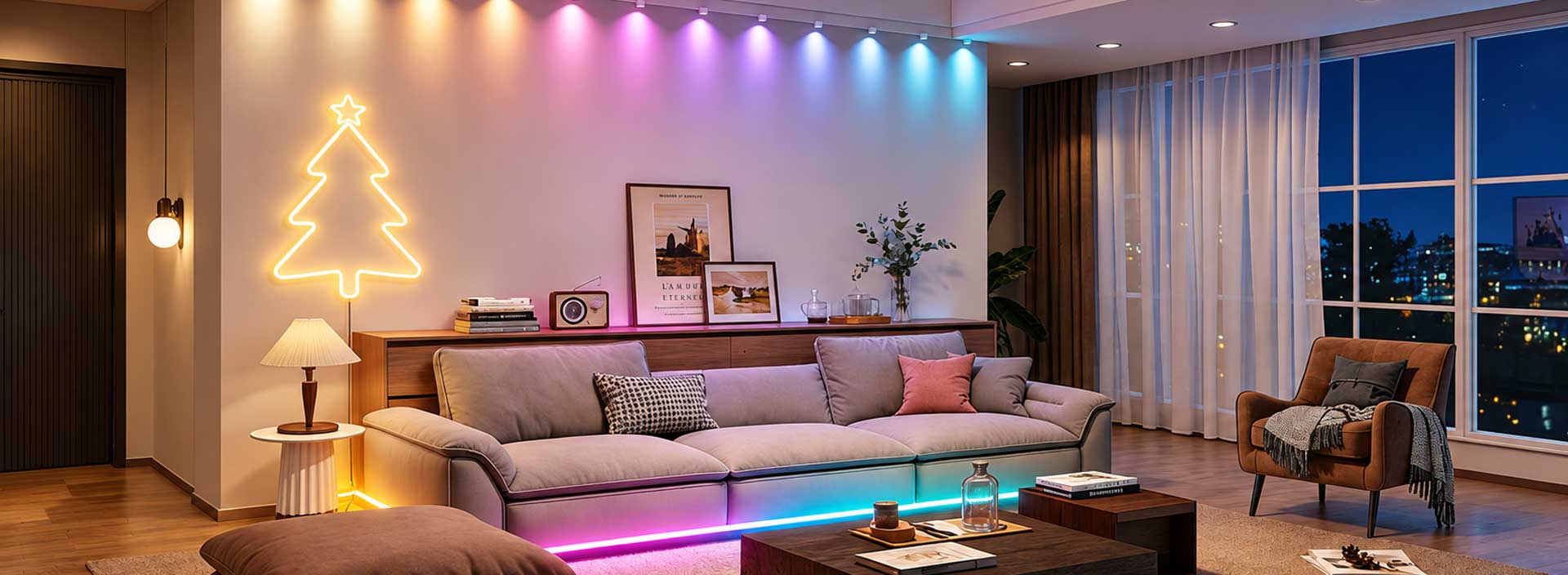
iot lighting platform benefits extend beyond remote switching. A well-developed platform connects lighting hardware, mobile applications, cloud services, automation, voice control, device data, firmware management, and technical support. Buyers select this approach to simplify product development, create a consistent user experience, and support future product categories through one connected system.
Smart Lighting ranges often begin with one category and gradually expand into bulbs, strips, light bars, decorative fixtures, outdoor products, entertainment lighting, or Electrical Accessories. Managing each category through a separate application creates fragmented accounts, repeated setup steps, and higher support costs.
A smart lighting integration system allows compatible products to share common functions such as onboarding, grouping, schedules, scenes, account permissions, and firmware updates. Users can build room-based or activity-based lighting without switching between several applications.
For buyers, a unified structure also makes product planning easier. New device profiles can be introduced without rebuilding the complete software foundation for every model.
Individual remote control provides convenience, but connected lighting solutions produce greater value when several devices respond together.
A home theater scene may dim ceiling lights, activate light strips, and synchronize entertainment lighting. A commercial schedule may control multiple zones according to opening hours. Outdoor lighting may follow sunset times, while bedroom products can gradually reduce brightness before sleep.
These experiences depend on coordinated commands, stable cloud communication, and clear automation logic. Platform selection should therefore consider how devices interact, not only how each light operates independently.
Developing accounts, device pairing, cloud communication, remote access, automation, voice integration, update management, and operational tools from the beginning requires substantial time and testing.
This is one reason companies ask why choose IoT lighting platform rather than building every layer separately. A proven platform provides an established technical foundation that can be adapted to the target product range and market.
Development can then focus on areas that create visible differentiation:
Lighting structure and industrial design
Customized scenes and dynamic effects
Branded application interfaces
Packaging and product presentation
Regional languages and services
New product-category development
The platform still requires validation with the selected hardware, firmware, and application configuration. Existing technology reduces repeated foundational work but does not remove the need for product-specific testing.
Connected devices may require firmware upgrades after shipment. Updates can improve stability, add functions, or resolve compatibility issues without physically recalling products.
A suitable platform should record device identity, firmware version, connection status, and supported functions. Diagnostic information can also help technical teams distinguish between network conditions, account problems, firmware behavior, and hardware faults.
Permission management is equally important. Household users may share devices with family members, while commercial installations may assign different control rights to operators and administrators.
| Evaluation Area | Practical Question |
|---|---|
| Device coverage | Can the platform support planned lighting categories? |
| Connectivity | Which communication protocols are available? |
| App functions | Are grouping, scenes, and automation included? |
| Integration | Which voice and external platforms are supported? |
| Customization | Can branding and interface elements be modified? |
| Updates | How are firmware versions released and recovered? |
| Operations | Are device records and diagnostics accessible? |
| Expansion | Can new products join the existing ecosystem? |
The benefits of connected lighting system architecture are strongest when platform capability matches the product roadmap. An oversized solution can introduce unnecessary complexity, while a limited platform may restrict future expansion.
The factory needs to manage controller versions, device identifiers, firmware programming, functional tests, and packaging claims according to the approved platform configuration. A software function should not be advertised until it has been verified on production-equivalent units.
Hardware, firmware, application, cloud, and production records should follow one controlled specification. This coordination helps maintain consistent operation across different batches and gives buyers a clearer route for product updates and repeat orders.
An IoT platform ultimately provides a framework for developing and operating a connected product range. Its commercial value comes from combining scalable technology with reliable manufacturing, manageable customization, and continued system support.