Smart Lighting products are no longer defined only by hardware performance. The app has become the core interaction layer, shaping how users control, personalize, and experience lighting systems. Customization of the app is now a key strategy for brands that want to differentiate, improve retention, and build long-term ecosystems.
Research in connected device markets shows that applications with tailored user interfaces and optimized workflows can increase user engagement by more than 30 percent. This highlights the importance of investing in a structured approach to customization.
Before starting any customization work, it is essential to clarify the product’s target market and usage scenarios. A smart lighting app designed for home ambiance will differ significantly from one used in commercial or entertainment environments.
Understanding the end user helps determine which features should be prioritized. This step lays the foundation for custom smart lighting app development and ensures that the final product aligns with real usage needs rather than generic assumptions.
A clear positioning strategy also prevents unnecessary feature expansion, which can increase cost and complexity.
Building an app entirely from scratch can be time-consuming and expensive. A more efficient approach is to start with a customizable framework provided by a professional lighting app development service.
These frameworks typically include core functions such as device pairing, scene control, scheduling, and firmware updates. By modifying and extending these modules, brands can create a unique application without rebuilding essential features.
This method reduces development time while maintaining flexibility for future upgrades.
The visual layer of the app is the most direct way to reflect brand identity. Elements such as color schemes, icons, layout structure, and navigation flow should match the product’s positioning and target audience.
A well-designed interface improves usability and strengthens brand recognition. Consistency across all screens ensures that users can navigate the app easily without confusion.
This stage transforms a standard application into a branded experience, making the product more memorable in competitive markets.
Beyond appearance, the way users interact with the app is critical. Control logic should be intuitive, responsive, and aligned with real usage habits.
Grouping devices, creating scenes, and adjusting lighting parameters should require minimal steps. Efficient interaction design improves usability and reduces learning time for new users.
A strong IoT lighting software solution integrates device control, automation, and real-time feedback into a seamless workflow, ensuring that commands are executed quickly and accurately.
Smart lighting apps must support stable communication between devices, whether through Wi-Fi, Bluetooth, or other protocols. Compatibility with broader smart home ecosystems is also becoming increasingly important.
During the process of how to customize lighting app, ensuring stable connectivity and multi-device synchronization should be a priority. This prevents common issues such as delayed response or device disconnection.
A well-integrated system allows different products to operate within one unified platform, improving scalability and user satisfaction.
Customization should extend to functional features that match specific usage scenarios. Automation, scheduling, and scene presets can significantly enhance the user experience.
For example, lighting can automatically adjust based on time, activity, or environment. These features reduce manual control and create a more intelligent system.
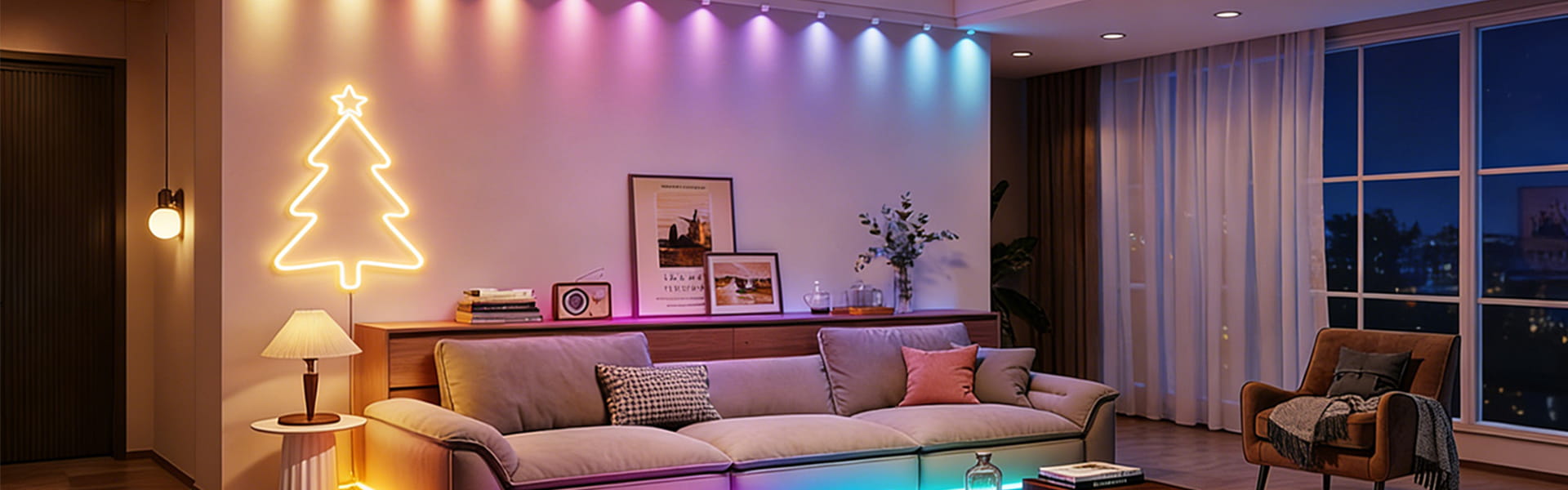
Products like Customizable Bluetooth Permanent Exterior Holiday Lights benefit from scenario-based customization, where lighting effects and schedules are tailored to seasonal or decorative needs.
Performance plays a major role in user satisfaction. Slow response time, unstable connections, or app crashes can undermine even the most advanced features.
To improve stability, developers should focus on optimizing data transmission, reducing latency, and ensuring smooth interaction across all devices. Comprehensive testing under different network conditions is essential.
Optimization helps improve overall responsiveness and ensures that the app performs reliably in real-world environments.
Customization does not end after the app is launched. Continuous updates are necessary to fix issues, introduce new features, and adapt to changing market demands.
A scalable system design allows new devices and functions to be added without disrupting existing users. This is particularly important for brands planning to expand their product lines.
Long-term support ensures that the app remains relevant and competitive over time.
| Stage | Focus Area | Outcome |
|---|---|---|
| Planning | Market positioning | Clear development direction |
| Framework selection | Core functionality | Faster development |
| Interface design | Branding and usability | Strong identity |
| Interaction design | Control logic | Improved efficiency |
| Integration | Connectivity and compatibility | Stable system |
| Optimization | Performance and testing | Reliable experience |
Customizing a smart lighting app requires a balanced approach that combines design, functionality, and system integration. Each stage of development contributes to the overall user experience and product value.
As smart lighting continues to evolve, the app becomes the central point of interaction and differentiation. Brands that invest in thoughtful customization can create more engaging, scalable, and competitive lighting solutions.