
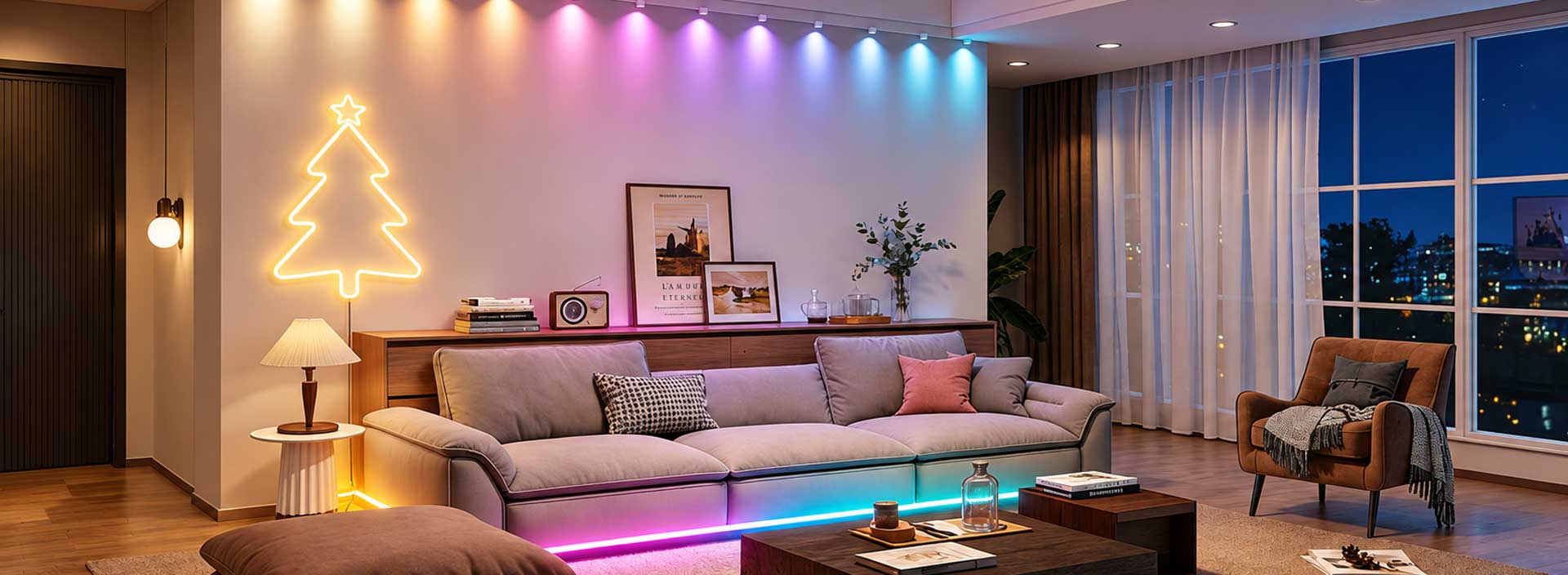
Lighting has moved from single-color output to dynamic, multi-zone control. RGBIC Smart Lighting technology represents this shift by allowing multiple colors to display on one strip or fixture at the same time, rather than forcing the entire product to show a single uniform color.
This advancement changes how lighting is used in entertainment spaces, gaming setups, and ambient environments. Instead of static illumination, lighting becomes interactive, segmented, and visually layered.
Traditional RGB lighting uses red, green, and blue LEDs to create different colors, but all LEDs on a strip typically display the same color at once. RGBIC adds an integrated control chip to each segment, allowing independent control of multiple sections.
This means a single strip can display gradients, flowing effects, or multi-color patterns simultaneously. When asking what is RGBIC lighting technology, the key point is segmented control rather than uniform output.
Each segment operates independently, creating more complex and visually engaging effects compared to standard RGB systems.
The introduction of independent control chips transforms lighting from a simple output device into an intelligent led lighting system. Each segment can respond to commands individually, enabling effects such as color waves, chasing patterns, and synchronized transitions.
Instead of sending one signal to the entire strip, the controller distributes instructions across multiple zones. This creates layered lighting effects that are more immersive and adaptable.
This approach is widely used in environments where visual impact matters, including gaming rooms, media walls, and decorative installations.
RGBIC lighting systems rely on three main components working together:
LED segments with integrated control chips
A controller that processes commands
A software interface that defines lighting effects
The controller plays a central role by translating app commands into signals that each segment can understand. This coordination allows precise control over color, brightness, and timing.
A well-designed system ensures that transitions are smooth and synchronized across all segments.
RGBIC technology introduces several key improvements that make it more versatile and appealing.
| Feature | Traditional RGB | RGBIC Technology |
|---|---|---|
| Color output | Single color at a time | Multiple colors simultaneously |
| Control method | Unified control | Segmented control |
| Visual effects | Limited patterns | Dynamic and layered effects |
| Application range | Basic lighting | Advanced decorative and interactive use |
These differences highlight why RGBIC smart lighting system features are becoming a preferred choice in modern lighting applications.
RGBIC lighting is often paired with app-based control systems to unlock its full potential. Through mobile applications, users can customize effects, adjust brightness, and create personalized scenes.
This integration turns lighting into a flexible color changing lighting solution that adapts to different moods and activities. Users can switch between preset modes or design their own lighting patterns based on preference.
Smart control also enables synchronization with music, games, or environmental conditions, adding another layer of interactivity.
One of the most popular uses of RGBIC technology is in immersive environments. Products like Smart RGBIC Gaming Light Bars demonstrate how segmented lighting enhances visual depth and atmosphere.
In gaming setups, lighting can react to in-game actions or audio signals, creating a more engaging experience. In home environments, it can be used for ambient lighting, accent decoration, or dynamic scene creation.
The ability to display multiple colors at once allows for more creative and expressive lighting designs.
Despite offering more advanced features, RGBIC systems can maintain efficient energy usage. LED technology remains highly efficient, and segmented control allows users to adjust brightness and activity levels based on need.
Studies on LED lighting show that smart control systems can reduce energy consumption by optimizing usage patterns and avoiding unnecessary operation. This makes RGBIC not only visually appealing but also practical for long-term use.
Independent segment control for multi-color display
Dynamic lighting effects with smooth transitions
Integration with smart control platforms
Compatibility with various application scenarios
Enhanced visual depth compared to traditional lighting
These characteristics define the value of RGBIC technology in modern lighting design.
rgbic smart lighting technology introduces a new level of flexibility and creativity by enabling independent control of multiple lighting segments. This transforms lighting from a static function into a dynamic visual system.
As smart lighting continues to evolve, RGBIC stands out as a key innovation that combines advanced control, enhanced visual effects, and seamless integration with digital platforms. It provides a foundation for more interactive and engaging lighting experiences across a wide range of environments.